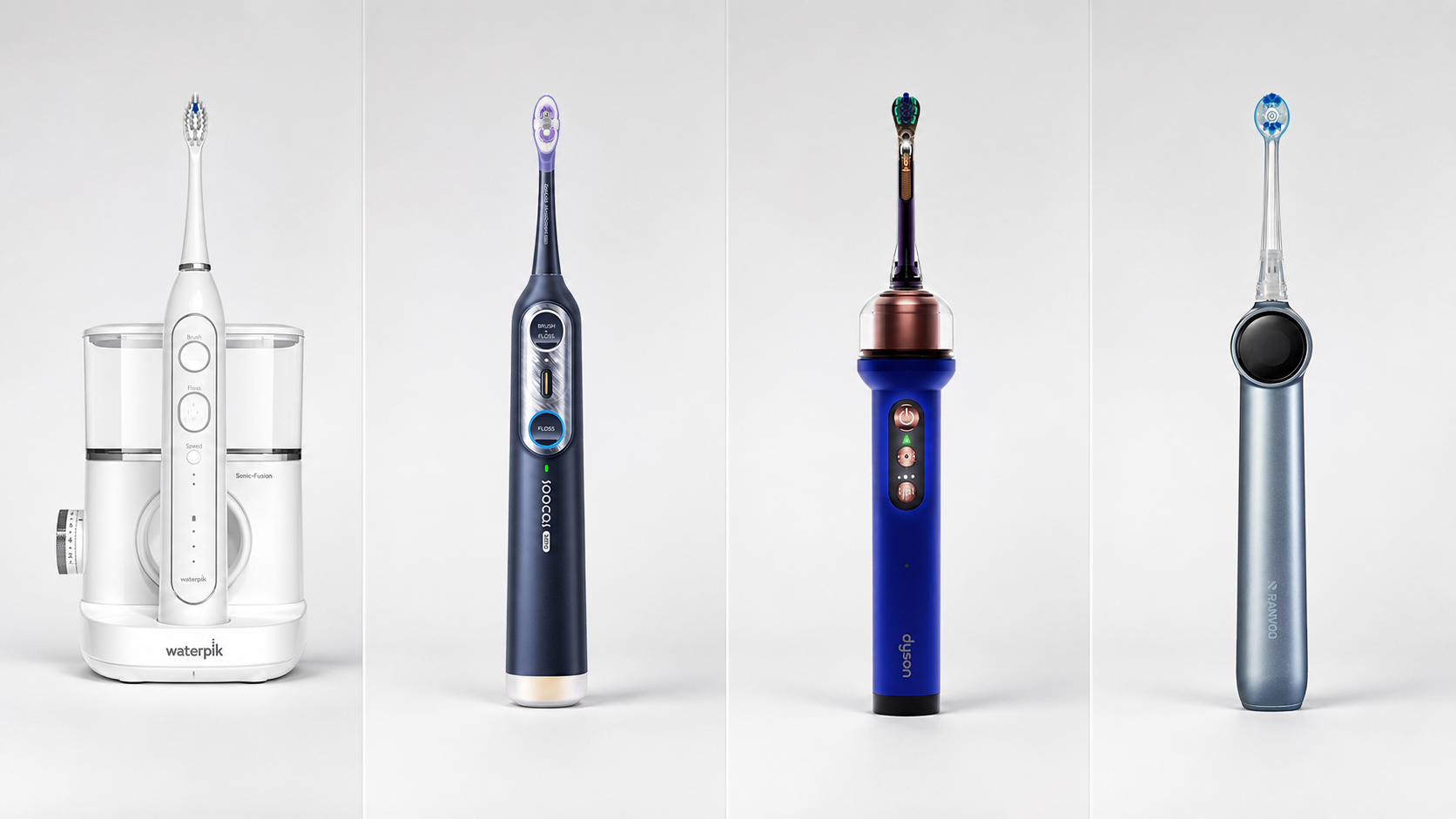











The short answer
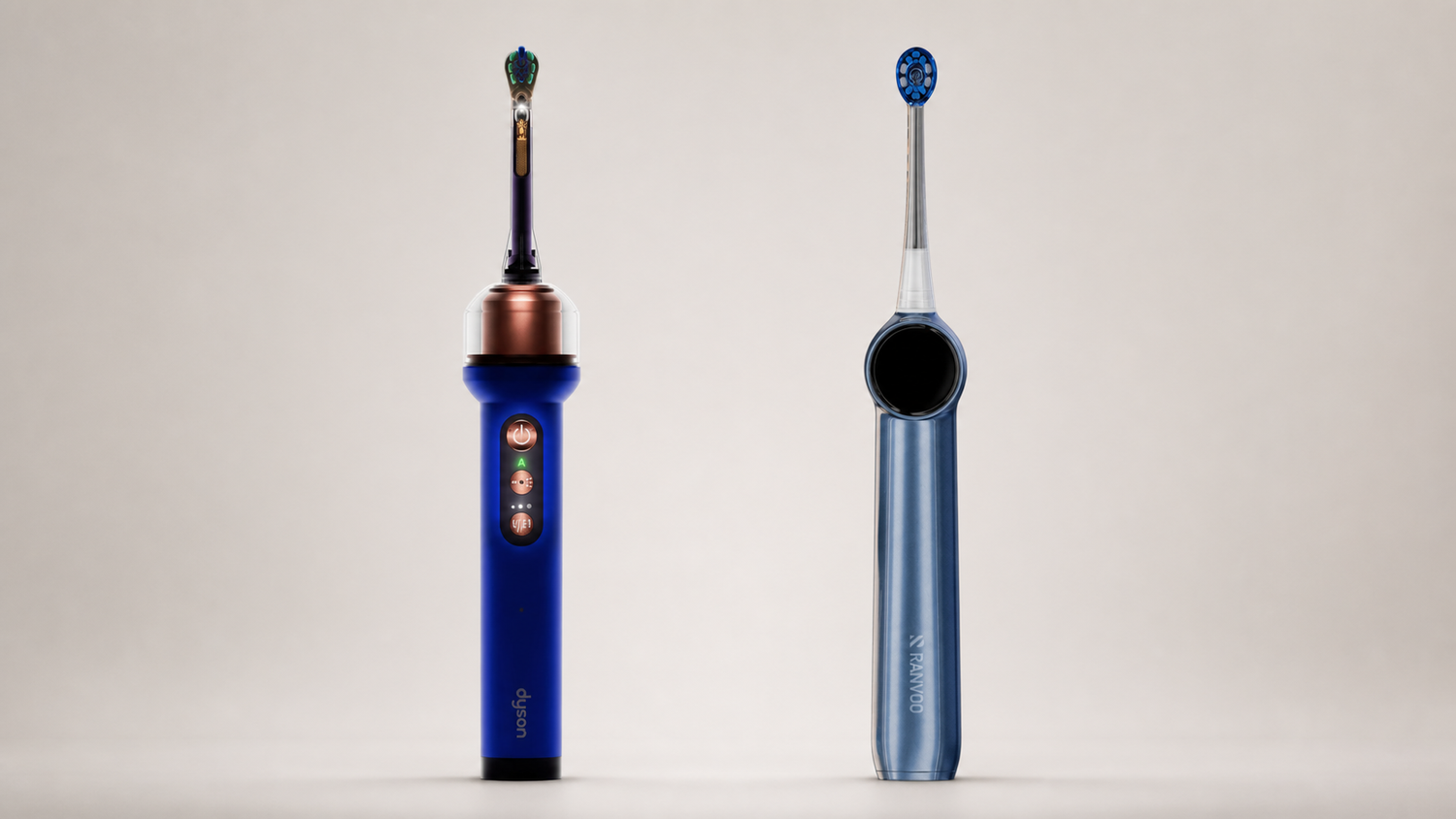
Choosing between Dyson CameraJet and RANVOO AirJet X5 comes down to the kind of brushing experience you want.
CameraJet uses a camera to find gaps between your teeth, then sends a targeted burst of mouth rinse from a tank in the handle. It is designed for people who value live visuals, app guidance and a more connected routine.
We designed AirJet X5 for people who want to clean hard-to-reach areas without adding extra steps. AirJet™ 2.0 creates microbubbles as you brush and guides them around teeth and into gaps—without a camera or separate liquid tank.
Choose CameraJet if camera guidance matters most to you. Choose AirJet X5 if you want a simpler routine, longer battery life and a lower ownership cost.
The core differences
| Core difference | Dyson CameraJet | RANVOO AirJet X5 |
|---|---|---|
| What powers the jet | Mouth rinse pumped from the handle | Airflow mixed with fluid and toothpaste around the brush head |
| How it reaches gaps | A camera detects a gap and triggers a targeted liquid burst | AirJet™ 2.0 creates microbubbles and guides the flow as you brush |
| Cleaning pattern | Selective bursts at camera-detected targets | Guided microbubble flow that moves with the brush head |
| Tested cleaning areas | Dyson publishes clinical and lab claims using several comparison methods | Published one-use reports cover the whole mouth, back teeth, tooth grooves, interdental spaces and the gumline |
| Gum-care testing | Dyson cites multi-week studies, mainly against a manual toothbrush | A 28-day PH5 test measured gum inflammation, gum bleeding and sulcus bleeding against an unnamed control |
How does each toothbrush clean between teeth?
Both toothbrushes use a jet, but the jet works in a very different way.
CameraJet follows a see-and-target process:
camera → gap detection → mouth-rinse burst
Its 100,000-pixel macro camera tracks gaps between teeth and releases up to 0.15 ml of liquid toward a detected target. The MyDyson app can show live footage and a coverage map, helping you see where you have brushed and where you may have missed.
This also adds a few steps to the routine. You need to fill the dock with mouth rinse, use products that allow the camera to see clearly, rinse the tank after brushing and clear any remaining liquid from the jet.
AirJet X5 follows a create-and-guide process:
airflow → microbubble creation → guided flow
AirJet X5 uses a built-in air pump to create microbubbles from the fluid already around the brush head. Its Coandă brush head then guides the flow along tooth surfaces, toward gaps and around the gumline. There is no camera to aim and no mouth-rinse tank to refill.
You simply choose a mode, brush and follow the timer on the handle. AirJet X5 does not show live video or a camera-based coverage map, but it keeps the routine familiar and easy to repeat every day.

What do the test results mean for you?
Performance numbers are only helpful when you know what was tested. Dyson and RANVOO use different study designs, time periods and comparison groups, so their percentages should not be treated as results from the same test.
Dyson's US product page refers to a six-week clinical study with 204 participants who used Brush and Auto-jet mode twice a day. The comparison was with a manual toothbrush. Dyson also publishes laboratory claims comparing CameraJet with manual and premium electric toothbrushes.
For AirJet, we focused on results that are easy to connect to everyday brushing:
- Cleaner hard-to-reach areas after one use. In a 20-person test, dentist-assessed Plaque Index decreased by 99.08% across the whole mouth, 99.30% on a back tooth and 98.81% in the groove of a back tooth. A separate 20-person imaging test measured a 99.97% decrease in interdental plaque area and a 99.50% decrease around the gumline after one use.
- Healthier-looking gums over 28 days. In a PH5 test, the AirJet group used Bubble mode with a soft brush head. Dentist-assessed gum inflammation, gum bleeding and sulcus bleeding all improved, with statistically significant differences between the test and control groups at day 28.
- Grade 1 plaque-removal performance. In testing under T/CPQS E00048.1-2022, PH5 achieved Grade 1 in the human-plaque evaluation, with a Plaque Index change of 2.8.
You can review the supporting documents on our Testing & Evidence page. These were not head-to-head tests against CameraJet. The control toothbrush in the 28-day gum-care test was not identified as CameraJet, and the one-use reports apply to RANVOO's wider AirJet toothbrush evidence rather than X5 alone.
Daily use, battery and cost
| Daily-use factor | Dyson CameraJet | RANVOO AirJet X5 |
|---|---|---|
| Setup before brushing | Fill the dock with mouth rinse; the dock fills the 12.5 ml handle tank | Select a mode and brush; no separate jet tank to fill |
| Guidance and controls | Live camera view, coverage map, app and haptic alerts | 0.79-inch on-handle display with mode, battery and timer information |
| Cleaning after use | Rinse the brush head and tank, then clear remaining liquid from the jet | Rinse the brush head as with a regular electric toothbrush |
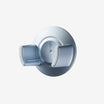
| Charging and storage | Refill-and-charge dock | Magnetic wall mount with wireless charging |
| Weight | 230 g | 153 g with brush head—77 g lighter |
| Battery life | Up to 10 days under Dyson's stated conditions | Up to 60 days |
| US listed price* | $499.99 at launch | $127.99 sale price |
| Brush heads included | Two | Three |
| Replacement brush-head cost** | $29.99 for two—about $15 each | $19.99 for three—about $6.66 each |
| Other ongoing supplies | Mouth rinse is needed for jet cleaning; Dyson recommends compatible clear, low-foaming rinse and non-foaming toothpaste | No AirJet-specific mouth rinse or toothpaste required |
If you enjoy app guidance and live visuals, CameraJet offers more connected features. If you want fewer steps before and after brushing, AirJet X5 is lighter, lasts longer between charges and costs less to own.
*US prices checked September 2, 2026. Prices and promotions may change.
Which routine fits you better?
CameraJet may suit you if you want:
- A live view inside your mouth
- Camera-based coverage guidance
- App-connected brushing feedback
- A refill-and-charge dock
AirJet X5 may suit you if you want:
- Microbubble cleaning without aiming a camera
- No separate mouth-rinse tank
- Tested cleaning across hard-to-reach areas
- Longer time between charges
- A lighter brush and lower ownership cost
Whichever you choose, the best toothbrush is the one you can use comfortably and consistently. Neither system has been shown to replace flossing for everyone, so ask your dentist or hygienist which interdental cleaning method is right for you.
 Best Overall
 Best Value
 Best for Sensitive Teeth