
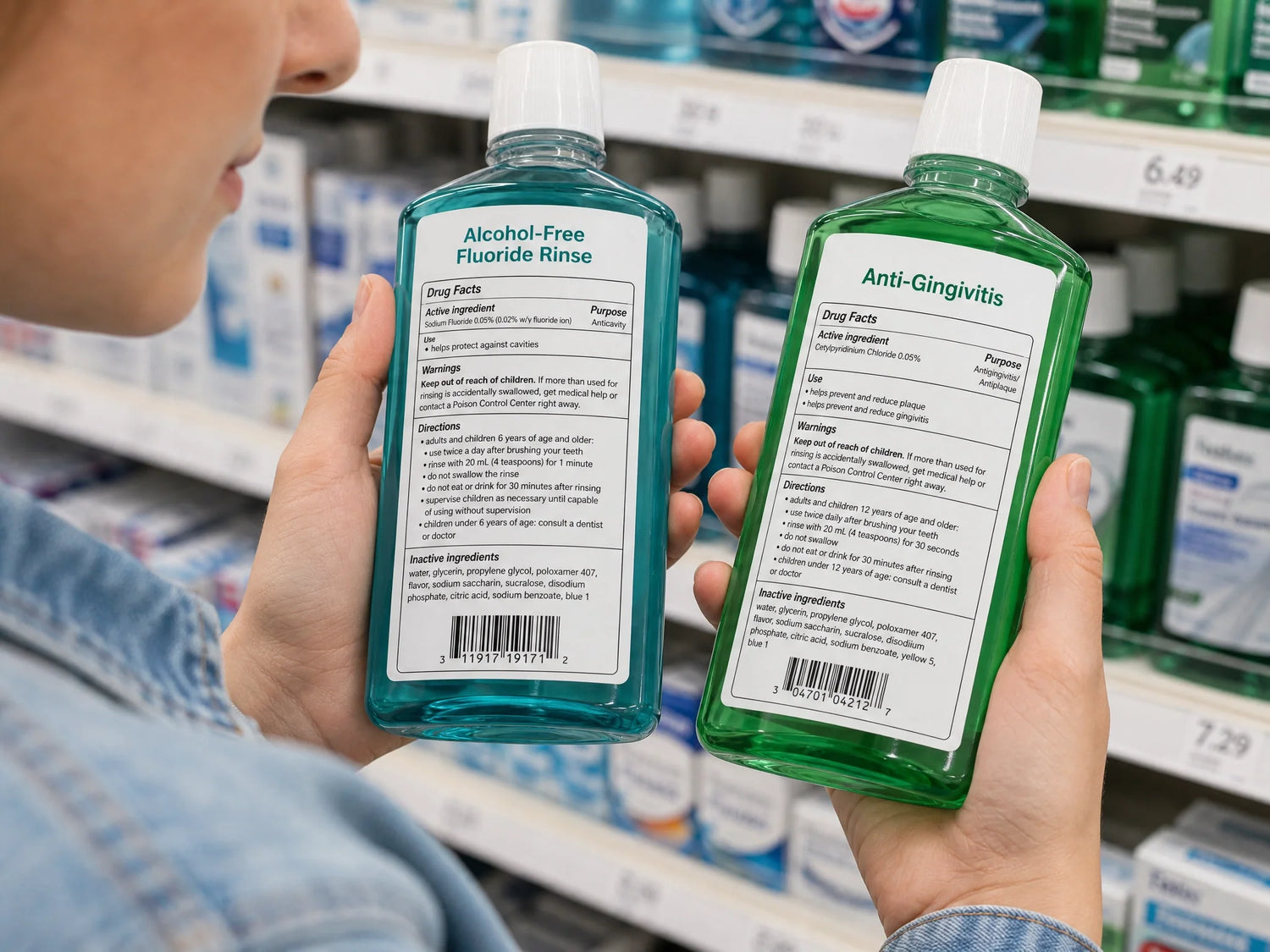
TL;DR: For most people, alcohol-free mouthwash offers equivalent plaque and gingivitis control with far less irritation and dryness. The true heavy lifting comes from active ingredients like essential oils, CPC, or chlorhexidine — not ethanol. Unless you have a specific short-term therapeutic need under professional guidance, alcohol-free is the gentler, safer daily choice.
What Is Alcohol-Free Mouthwash and How Does It Work?
An alcohol-free mouthwash skips ethanol and uses alternative active ingredients to kill bacteria, neutralize odor, and protect teeth. These formulas provide the same therapeutic benefits without the burn or drying effects.
Common active ingredients that replace alcohol: - Cetylpyridinium chloride (CPC) — an antimicrobial that disrupts bacterial cell walls. - Essential oils (thymol, menthol, eucalyptol) — natural antiseptics that reduce plaque and gingivitis, even in alcohol-free formulations. - Chlorhexidine — the prescription gold standard for gingivitis, often alcohol-free to reduce irritation. - Fluoride (sodium or stannous) — strengthens enamel and prevents cavities. - Zinc compounds — neutralize volatile sulfur compounds that cause bad breath. - Stabilized chlorine dioxide — oxidizes odor-causing bacteria without drying tissues.

Why Does Traditional Mouthwash Contain Alcohol in the First Place?
Ethanol has traditionally served as a solvent, a preservative, and a mild antiseptic enhancer. But it isn’t the primary bacteria-killer — that job belongs to the active ingredients listed above.
“Alcohol in mouthwash is not the bacteria-destroying hero you might think — it’s mostly there to dissolve other ingredients and give that brisk, tingling sensation.”
The burning feeling can actually trick users into thinking the product is working harder, but research shows alcohol is an unnecessary bystander for most therapeutic goals.
How Does Alcohol-Free Mouthwash Compare in Killing Bacteria?
Clinical studies consistently show that alcohol-free and alcohol-based mouthwashes perform nearly identically when the active ingredients are the same. Here’s a head-to-head look at real trial data.
| Study | Formula Tested | Plaque Reduction | Gingivitis Improvement | Key Safety/Tolerability Note |
|---|---|---|---|---|
| 6-month essential oil trial (BMC Oral Health, 2017) | Alcohol-containing vs. alcohol-free essential oil rinses | 37.8% (ACM) vs. 37.0% (AFM) reduction; no significant difference | 28.2% (ACM) vs. 26.7% (AFM) reduction; both p<0.001 | Both well tolerated; alcohol-free caused fewer sensitivity reactions |
| 6-week chlorhexidine study (British Dental Journal, 2015) | 0.2% CHX with alcohol vs. 0.2% CHX alcohol-free | Significant plaque reduction in both groups vs. brushing alone (p<0.0001) | Gingival bleeding scores significantly lower for both CHX groups | Coated tongue and taste disturbances were the main side effects; alcohol-free group had slightly fewer treatment-related events |
| 4-week clinical study (Bangladesh J Med Sci, 2023) | Alcohol-containing rinse vs. alcohol-free rinse | 25.4% vs. 23.1% mean plaque reduction | 19.2% vs. 18.5% reduction in gingival inflammation | Alcohol-free group reported noticeably less dry mouth and oral irritation |
All three investigations point to one takeaway: alcohol-free mouthwash matches alcohol-based formulas in plaque and gingivitis control, while often causing fewer uncomfortable side effects. The active antimicrobials do the work — ethanol is just along for the ride.

When Is Alcohol-Free Mouthwash the Clear Winner? (Tolerability & Sensitivity)
For many people, comfort and safety make alcohol-free the obvious choice. These populations benefit most.
For Individuals with Dry Mouth (Xerostomia)
Alcohol evaporates quickly, strips protective saliva, and can worsen dry mouth. An alcohol-free rinse with moisturizing ingredients like aloe or glycerin helps maintain tissue hydration. Dentists universally recommend alcohol-free formulations for anyone with medication-induced, autoimmune, or age-related xerostomia.
For People with Sensitive Gums, Burning Sensations, or Oral Mucositis
Ethanol irritates soft tissue. In one clinical comparison, 7 out of 32 patients using an alcohol-based chlorhexidine rinse reported burning mouth discomfort, while none did in the alcohol-free group. For cancer patients with oral mucositis or individuals with naturally sensitive gums, alcohol-free rinses deliver antimicrobial protection without the pain. But daily brushing also plays a critical role in minimizing gum irritation — which is why many dentists now recommend pairing a gentle rinse with an equally gentle toothbrush. The RANVOO AirJet X5 Electric Toothbrush, designed specifically for sensitive gums, uses innovative bubble-cleaning technology to sweep away plaque without harsh abrasive friction, making it a natural companion to alcohol-free mouthwash for those seeking a complete, non-irritating oral care routine.
For Those in Recovery, or Avoiding Alcohol for Religious/Cultural Reasons
Alcohol-free mouthwash removes any concern about ethanol exposure or ingestion, supporting daily compliance and peace of mind.
For Children and Orthodontic Patients
- Zero risk of intoxication if a child accidentally swallows the rinse.
- No stinging, so teens with braces are far more likely to use it consistently.
- Gentler on gum tissue already irritated by brackets and wires.
- Often fortified with fluoride, providing cavity protection right where it’s needed around hardware.
Where Do the Clinical Studies Stand on Safety? (Debunking the Alcohol-Cancer Myth)
A longstanding concern has linked alcohol-containing mouthwash to oral cancer. Here’s the current consensus.
Myth: Alcohol in mouthwash causes oral cancer.
Fact: A 2009 IARC review and multiple systematic analyses have found no consistent evidence that ethanol-based mouthwashes increase cancer risk when used as directed. Early sensational studies often involved industrial-grade isopropyl alcohol or didn’t control for smoking and heavy drinking.
Major dental bodies — including the ADA — do not classify alcohol in mouthwash as carcinogenic. Still, many dentists and patients prefer alcohol-free rinses for high-risk individuals (cancer survivors, heavy drinkers) out of an abundance of caution. Both alcohol-containing and alcohol-free rinses have earned the ADA Seal of Acceptance, meaning they meet rigorous safety and efficacy standards.
How to Choose the Right Mouthwash for Your Specific Oral Health Goals
If Your Goal is Maximum Plaque Control and Gingivitis Therapy…
Prescription chlorhexidine (usually alcohol-free) is the undisputed champion for short-term use. Over-the-counter essential-oil rinses with the ADA Seal — both alcohol-based (classic Listerine) and alcohol-free (Listerine Zero) — deliver strong anti-gingivitis results. Temporarily, a dentist may recommend an alcohol-containing rinse if you tolerate it well, but alcohol-free chlorhexidine is standard for acute cases. Caution: all chlorhexidine products can cause tooth staining, so use them only as directed.
If You Struggle with Persistent Bad Breath (Halitosis)…
Alcohol-based rinses can dry the mouth and trigger a rebound effect where odor worsens later. Alcohol-free formulas with zinc or chlorine dioxide actively neutralize volatile sulfur compounds — the actual smelly molecules. Zinc ions trap sulfur, while chlorine dioxide oxidizes odor-causing bacteria, delivering longer-lasting freshness without the dehydrating side effect.
If You Need a Gentle, Everyday Rinse for Cavity Prevention and Maintenance…
A fluoride-based alcohol-free rinse (products like ACT Anticavity or Crest Pro-Health Advanced) is the ideal daily driver. It strengthens enamel, fights cavities, and supports gum health — all without irritating sensitive mouths. As one practicing dentist put it: “For the vast majority of patients, an alcohol-free fluoride rinse is the safest and most comfortable way to protect teeth between visits.”

The Verdict: Is Alcohol-Free Mouthwash Better for You?
| Choose Alcohol-Free If… | Consider Alcohol-Based When… |
|---|---|
| You have dry mouth, sensitive gums, or any oral burning | You need a short-term prescription rinse and are not sensitive to alcohol (rare) |
| You want a daily maintenance rinse for gingivitis and plaque | You already use a specific essential-oil formula you tolerate well and your dentist approves |
| You’re buying for a child, teen, or orthodontic patient | Under professional guidance for acute gingivitis with a product that has long-term data |
| You’re recovering from oral surgery, radiation, or have mucositis | |
| You prefer to avoid any accidental ethanol ingestion |
Dentist’s bottom line: For everyday use and sensitive mouths, alcohol-free mouthwash is the smarter choice. It delivers equal plaque and gingivitis reduction, improves comfort, and sharpens compliance. Look for a therapeutic formulation with active ingredients and the ADA Seal — not for the presence or absence of alcohol.



Leave a comment
This site is protected by hCaptcha and the hCaptcha Privacy Policy and Terms of Service apply.