
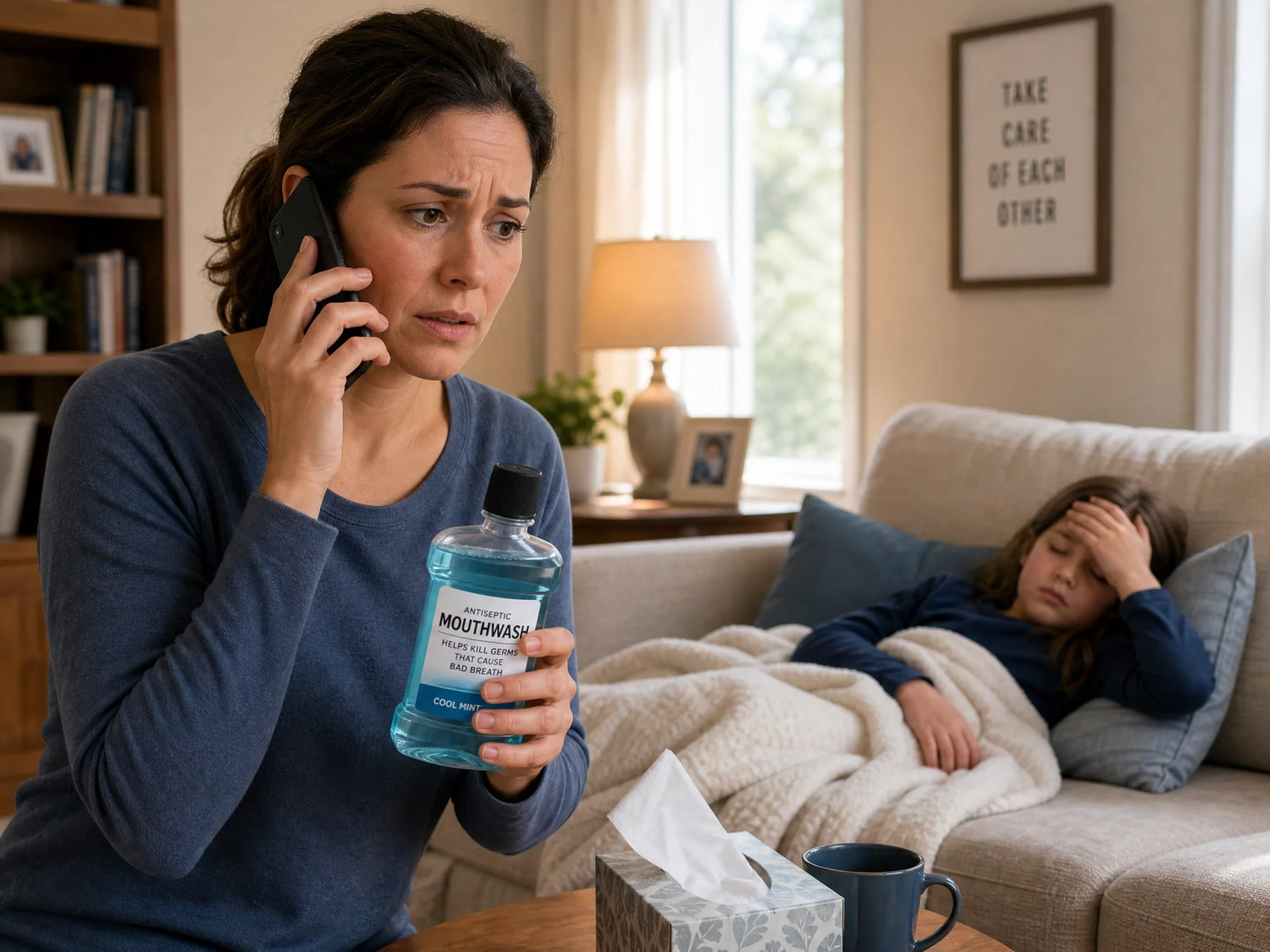
Swallowing a small splash is rarely dangerous, but a large gulp—especially for a child—can quickly turn into a medical emergency. Here’s exactly what to watch for and do.

What Happens Immediately After Swallowing Mouthwash?
The first sensation is often a strong burning in your throat and stomach. You might feel nauseous almost instantly. The outcome depends almost entirely on three things:
- The volume swallowed — a sip versus a full bottle
- The type of mouthwash — alcohol-based, fluoride-rich, or peroxide-heavy
- The person’s age and body weight — toddlers face far greater danger
A small accidental swallow in an adult usually causes little more than temporary stomach upset. But when a child downs even a mouthful, the risk of alcohol poisoning or fluoride toxicity becomes very real.
Why Is Swallowing Mouthwash Dangerous? Breaking Down the Toxic Ingredients
Not all mouthwashes are created equal. The danger lies in a handful of active ingredients that are harmless when swished, but harmful when swallowed in quantity. Here’s what to watch for:
| Ingredient | Its Purpose | Potential Toxicity if Swallowed |
|---|---|---|
| Ethanol (alcohol) | Kills germs, dissolves other ingredients | Intoxication, hypoglycemia, respiratory depression |
| Fluoride | Strengthens enamel | Nausea, vomiting, electrolyte imbalances, heart problems |
| Chlorhexidine | Powerful antiseptic | Severe mucosal irritation, chemical burns to the digestive tract |
| Hydrogen peroxide | Whitening, antibacterial | Gastric irritation, abdominal pain, gas formation |
| Essential oils (menthol, thymol, eucalyptol) | Flavoring and mild antisepsis | Mucosal irritation, potential aspiration danger |
All of these can cause trouble, but ethanol and fluoride are the most common culprits in serious cases.
The Risk of Alcohol (Ethanol) Poisoning
Many adult mouthwashes contain up to 27% ethanol — that’s higher than beer or wine. When a child drinks even a small amount, their blood sugar can plummet, leading to hypoglycemia, seizures, and dangerously slow breathing.
Drinking large amounts of mouthwash may cause symptoms similar to drinking large amounts of alcohol (drunkenness). Children have a much lower threshold for alcohol intoxication than adults.
An adult who drinks a significant volume may show slurred speech, uncoordinated movements, and loss of consciousness. The faster you get medical help, the better the chance for recovery. (Source: MedlinePlus)
How Much Fluoride Causes an Overdose?
Acute fluoride poisoning happens when a person ingests a dose around 5 mg per kilogram of body weight. Let’s put that in perspective for a common 0.05% sodium fluoride rinse (about 0.023% fluoride ion):
- A 10-pound toddler would need to drink about 3–4 fluid ounces to reach the danger zone.
- A child weighing 30 pounds would need around 10 ounces — nearly a full bottle.
- Normal accidental sips contain far less fluoride, so panic isn’t necessary for a tiny spill.
Still, watch for vomiting, diarrhea, or stomach pain, which can signal even a smaller overdose in sensitive individuals. (Source: Poison.org)
Other Irritating Chemicals (Chlorhexidine, Peroxide, and Essential Oils)
Chlorhexidine can cause chemical burns to the mouth, throat, and stomach lining if swallowed in large amounts. It’s not designed to be ingested, and even a small volume might trigger painful irritation.
Hydrogen peroxide in higher concentrations (like those in whitening rinses) can foam up and irritate the digestive tract. In rare, massive ingestions, oxygen gas can form and cause complications.
Essential oils like menthol and thymol are generally less toxic, but they can still burn mucosal surfaces and pose a choking risk if the person vomits and aspirates the oil-laden fluid.
What Are the Symptoms of Mouthwash Ingestion? (From Mild to Critical)
Symptoms vary with the dose. Here’s a tiered breakdown to help you judge the severity.
Mild Symptoms You Can Expect After a Small Swallow
These usually show up within minutes to an hour and tend to resolve on their own or with water dilution:
- Mild nausea or a single episode of vomiting
- Slight stomachache or heartburn
- Drowsiness or a feeling of “sluggishness”
- Short-lived diarrhea
If these are the only signs and the person is an otherwise healthy adult, home observation is often fine. Still, call Poison Control for advice.
Severe Symptoms That Signal a Medical Emergency
Any of these signs means you need emergency help immediately:
- Bloody vomit or vomit that looks like coffee grounds
- Severe abdominal pain or cramping
- Convulsions or seizures
- Loss of consciousness or extreme sleepiness you can’t wake from
- Rapid heart rate, shallow breathing, or difficulty getting air
- Slurred speech, uncoordinated movements, or sudden dizziness

When Is It an Emergency? A Checklist of Red Flags
Call 911 or head to the ER without delay if the person who swallowed mouthwash:
- Has trouble breathing or breathes very slowly
- Loses consciousness or becomes difficult to wake
- Has a seizure or convulsion
- Vomits repeatedly and cannot keep water down
- Shows signs of low blood sugar in a child: confusion, extreme sleepiness, or cold, clammy skin
When in doubt, let Poison Control guide you — but if any of these severe symptoms appear, seconds count.
How to Respond: Step-by-Step First Aid for Swallowing Mouthwash
- Stay calm. Panic doesn’t help anyone.
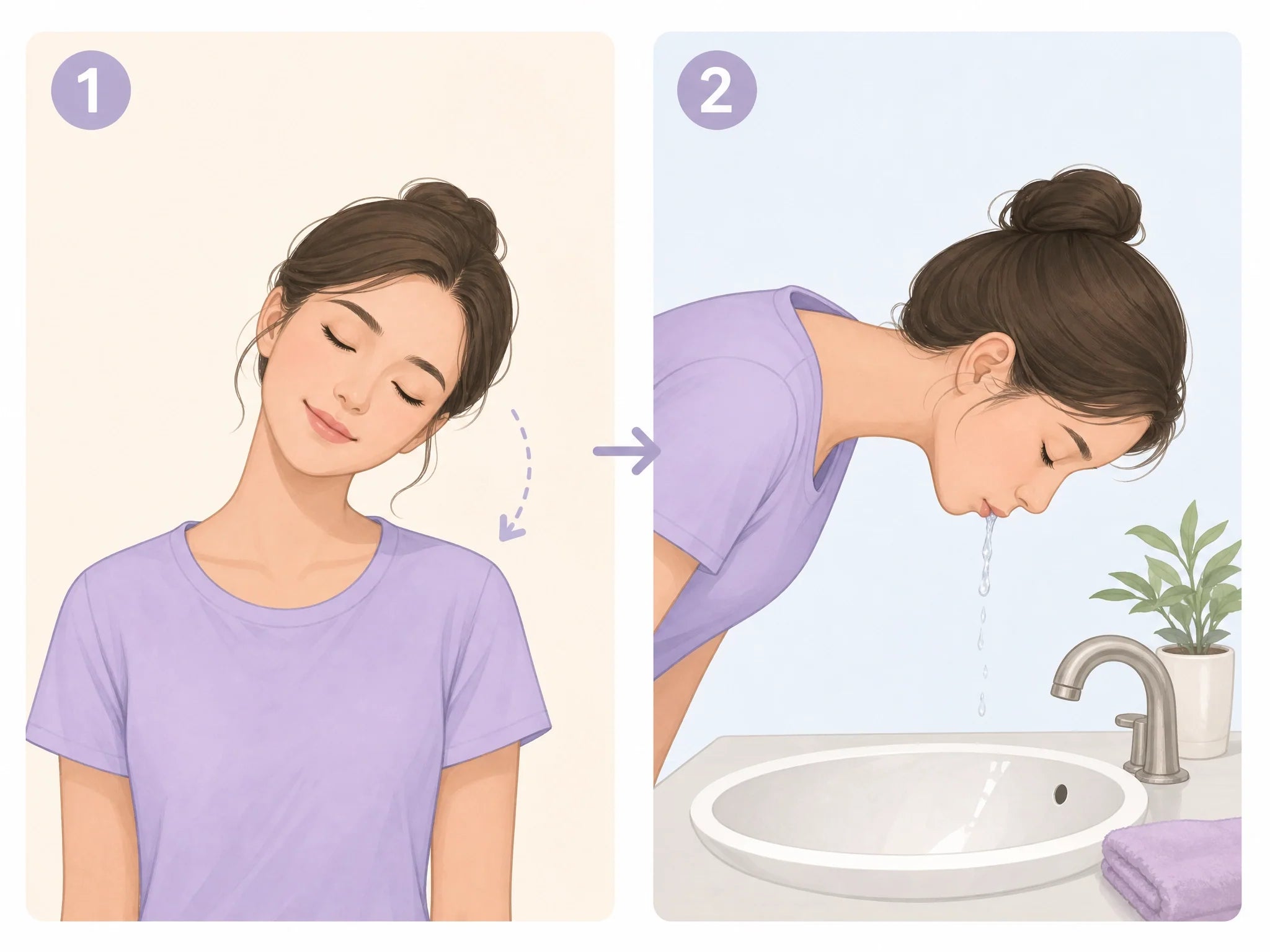
- Rinse the mouth immediately with a little water to dilute any remaining mouthwash.
- Give a small amount of water or milk to drink — only if the person is conscious, not having convulsions, and able to swallow. (Source: Poison.org)
- Do NOT induce vomiting. This can cause choking and re-injure the throat and esophagus.
- Call Poison Control at 1-800-222-1222. The service is free, confidential, and available 24/7.
- Have the mouthwash container with you so you can read off the ingredients, strength, and lot number.
Should You Make the Person Vomit? (Critical Warning)
DO NOT make the person throw up unless poison control or a healthcare provider tells you to. Forcing vomit can cause aspiration — the liquid enters the lungs — and a second chemical burn on the way back up. It’s one of the most dangerous mistakes you can make.
What Information to Give Poison Control
When you call, be ready to share:
- Age, weight, and current condition of the person
- Exact product name, brand, and percentage of alcohol or fluoride (if listed)
- Estimated amount swallowed and the time it happened
- Any symptoms you’ve noticed, even mild ones
This lets the specialist quickly decide whether you can stay home or need to go to the hospital.
Swallowing Mouthwash in Children vs. Adults: Where the Risks Differ
Children (especially toddlers) are exquisitely sensitive to alcohol. A 2-year-old who drinks just an ounce or two of a high-ethanol mouthwash can develop life-threatening low blood sugar, hypothermia, and seizures. Their small body size and immature metabolism make even a “small” sip a real danger. (Source: Poison.org)
Adults have more tolerance, but intentional or accidental ingestion of a large volume — several ounces — can still lead to severe intoxication, slow breathing, and organ strain. The risk goes up further if the person has underlying health conditions or is taking medications that interact with alcohol.
How to Prevent Accidental Mouthwash Swallowing Once and for All
- Store mouthwash out of reach — high cabinets with child-resistant latches
- Always use child-resistant caps, and make sure they click shut
- Supervise children during oral care routines; never leave them alone with the bottle
- Switch to an alcohol-free formula, especially if you have curious kids at home
- Clearly label any diluted or decanted mouthwash, and never store it in old food or drink containers
- Consider upgrading your daily oral care tools — using a gentler electric toothbrush like the RANVOO AirJet X5 can effectively clean teeth and gums without relying on harsh chemical rinses, reducing your family’s overall exposure to mouthwash ingredients. Its patented bubble-brush technology delivers a thorough clean while being extra kind to sensitive gums, making it a safer choice for households with young children or adults prone to gum irritation.

The Long-Term Outlook: Are There Lasting Effects?
A single, small accidental swallow rarely causes permanent damage. Most symptoms clear up within hours, and medical treatment — when needed — effectively reverses complications.
Repeated, heavy misuse is a different story. Chronic ingestion can lead to persistent gastritis, changes in the body’s acid-base balance, and metabolic imbalances from fluoride accumulation. In extreme cases, kidney dialysis has been required. (Source: MedlinePlus)
But for the typical accident — a curious sip or a distracted mouthful — the prognosis is excellent, especially when you act quickly and get the right guidance. Knowing what to do before an accident happens can turn a scary moment into a manageable one.


Leave a comment
This site is protected by hCaptcha and the hCaptcha Privacy Policy and Terms of Service apply.