Antiseptic mouthwash is a broad germ reducer usually used for short spells when there is an active gum problem or after dental work. Antibacterial mouthwash is more bacteria-focused and is often used daily to control plaque, gum inflammation, and bad breath. Labels can use both words loosely, so the active ingredient on the back is the most reliable way to choose.
One rule matters more than the label: mouthwash is an add-on to brushing and flossing, never a substitute.
Why Labels Confuse
Front label words are marketing. A product can be both antiseptic and antibacterial because an antiseptic that kills or slows bacteria is also acting as an antibacterial in that moment.
The back label, under “active ingredients,” tells you what is actually in the bottle. That is the list to check before choosing.
How They Work
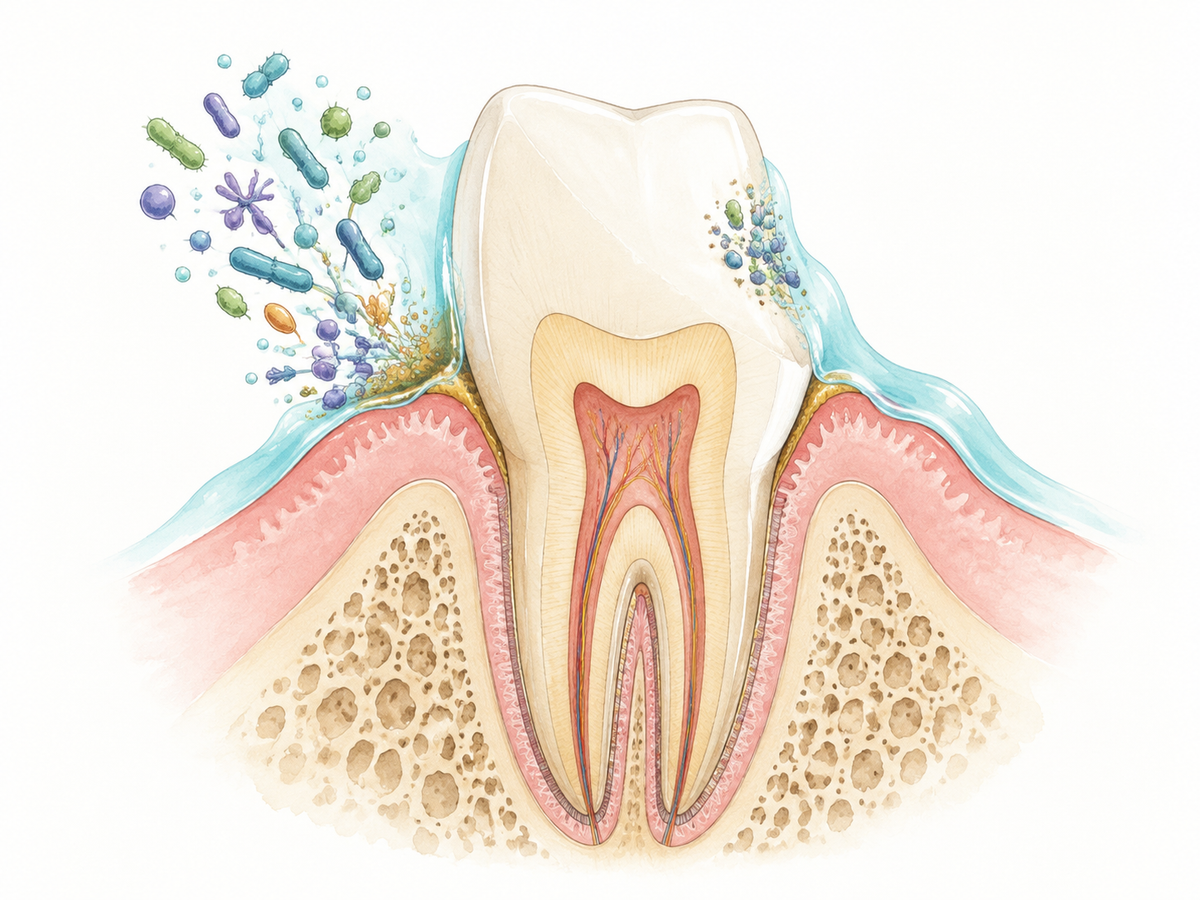
An antiseptic is a broad-spectrum agent made to reduce germs on living tissue, such as the gums and the lining of the mouth. An antibacterial is narrower: it targets bacteria specifically.
In mouthwash terms, an antibacterial may focus on the bacteria that form plaque and cause breath odor. An antiseptic may also affect fungi or viruses, which is why it is more likely to be chosen for an active infection, according to an overview of antimicrobial mouthwash mechanisms.
The practical difference matters most when choosing between daily freshness and treating a gum problem.
Ingredient Clues
Flip the bottle and look for the active ingredient. These are three common ones to know:
| Active ingredient | What it is | Common role |
|---|---|---|
| Chlorhexidine | Strong broad-spectrum antiseptic | Short-term gum infection or after dental work |
| Essential oils, such as eucalyptol, thymol, or menthol | Plant-based germ-fighting ingredients | Daily plaque, gum, and breath control |
| Cetylpyridinium chloride (CPC) | Bacteria-fighting agent | Daily plaque, gum, and breath control, often in alcohol-free formulas |
Chlorhexidine is strong and broad-spectrum. It can work against bacteria, fungi, and some viruses. CPC has antibacterial properties and appears in lower daily concentrations. Essential oils are plant-derived and are directly antibacterial and antifungal.
Alcohol is not the same as an antiseptic active. In many essential-oil rinses, alcohol is a carrier or preservative that adds flavor and a strong taste. The plant oils do the germ-fighting work, based on a review of essential-oil mouthwashes with and without alcohol.
Daily vs. Treatment
An antibacterial mouthwash is often designed for regular use. Formulas with CPC or essential oils can help control plaque, gingivitis, and bad breath as part of a daily routine. Clinical guidance on mouthwashes notes that chlorhexidine, essential oils, and CPC can be useful for managing early plaque-related gum problems alongside brushing and cleaning between teeth.
An antiseptic rinse like chlorhexidine is stronger and usually meant for a limited time. A dentist may recommend it after dental work, during an active gum infection, or for mouth sores. Chlorhexidine is often limited to 2–4 weeks because longer use can cause brown staining, according to guidance for dental practitioners. In the U.S., the 0.12% chlorhexidine rinse is only available by prescription.
Do not use a strong antiseptic like chlorhexidine indefinitely. If a dentist recommends it, ask how long to use it.
Match Your Problem
Here is a simple way to match the rinse to the situation:
- Bad breath or mild plaque: a daily antibacterial rinse with CPC or essential oils may be enough.
- Bleeding gums, swelling, or post-surgery care: ask your dentist about a short-term antiseptic rinse, usually chlorhexidine. These symptoms can have more than one cause, so a rinse is only part of care.
- Dry mouth, mouth ulcers, or alcohol sensitivity: choose an alcohol-free, gentler option. Alcohol-containing rinses can worsen dryness and burning in some people.
- Persistent symptoms: see a dentist. A different bottle will not treat ongoing gum disease or a tooth infection.
Safety Limits
Germ-fighting rinses can cause side effects if overused or used for too long.
- Staining: chlorhexidine is well known for brown tooth and tongue staining. Evidence from a Cochrane review found this staining increased with use for 4 weeks or longer.
- Taste changes: chlorhexidine can cause temporary taste alteration.
- Irritation: some people get burning, soreness, or irritation of the mouth lining.
- Microbiome disruption: frequent use can shift the balance of mouth bacteria. A systematic review found chlorhexidine lowered the variety of bacteria in the mouth, while CPC had a more targeted effect.
This does not mean all rinses are harmful. It means the right rinse should be used for the right purpose, for the right amount of time.
Mouthwash is not a replacement for brushing twice daily and cleaning between your teeth. It works best as an add-on. After rinsing, spit it out. Do not rinse with water right away unless the label says otherwise, based on current mouthwash guidance.
Follow the label directions or your dentist’s instructions, especially for how long to use a treatment rinse.
Decision Checklist
Use this quick flow when standing in the aisle or looking in your cabinet:
- Identify the problem: is it breath or plaque, or a possible infection or procedure-related issue?
- Check how long it has lasted: a new issue or something that will not go away?
- Read the active ingredient list on the back.
- If it is a daily breath or plaque issue, choose an antibacterial or cosmetic rinse. If it is an active infection or after a procedure, ask your dentist about an antiseptic.
- If you are unsure or symptoms last more than a few days, see a dental professional.
This article has been reviewed by an oral health professional for accuracy. It is intended to provide general educational information and should not be used as a substitute for personalized medical advice, diagnosis, or treatment. If you have questions or concerns about your oral health, please consult a dentist, physician, or other qualified healthcare provider.