

















Teeth whitening strips can be a good choice for mild surface stains, a low-cost product, and the convenience of whitening at home. They are not the best choice for deep or medication-related stains, existing fillings, crowns, veneers, or very sensitive teeth. In those cases, a dentist can help you choose a safer or more effective option.
Quick rule: whitening strips can lighten natural teeth, but they will not change the color of dental work or reach deep internal discoloration.
How Whitening Strips Work
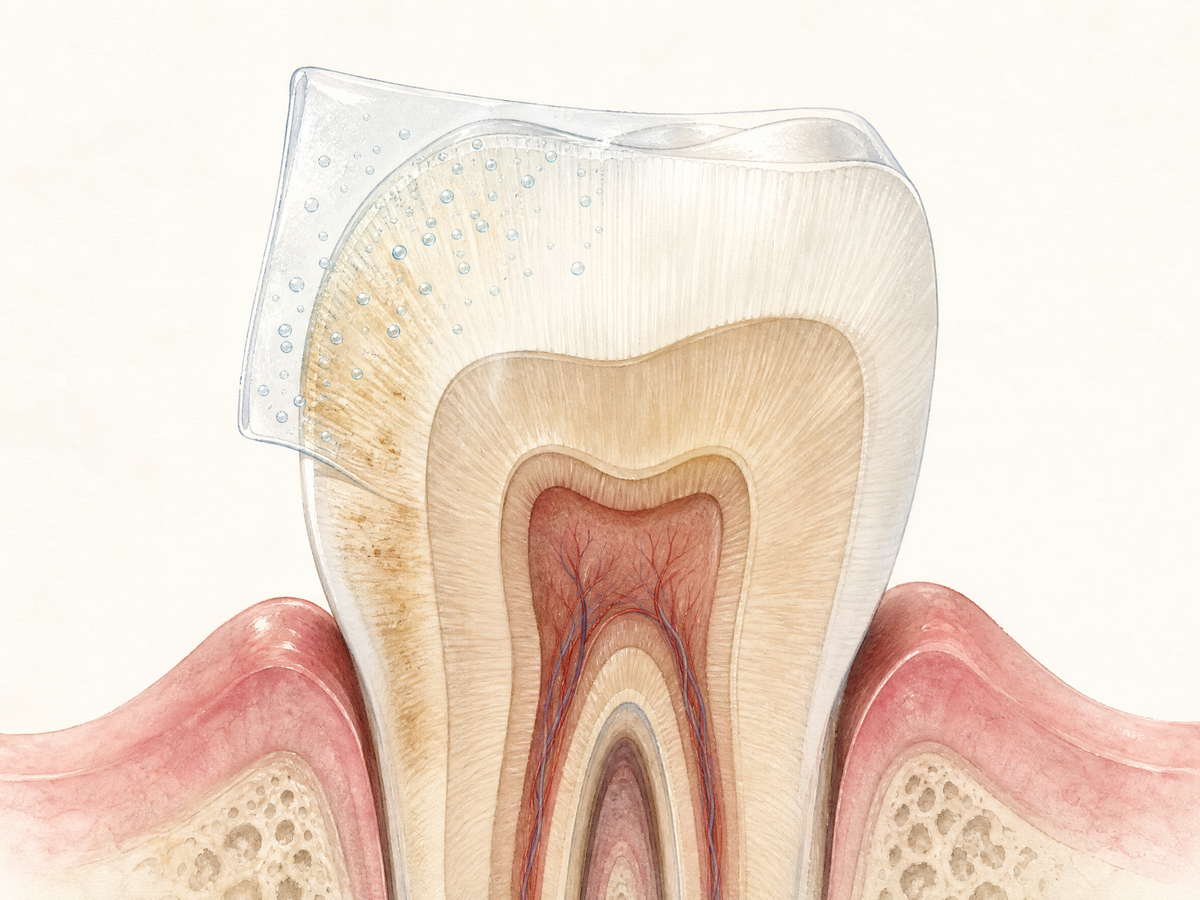
Whitening strips are thin, flexible pieces of plastic coated with a bleaching gel. The gel usually contains hydrogen peroxide or carbamide peroxide. These are bleaching ingredients that break down stain molecules on and just below the tooth surface.
The outer layer of a tooth is called enamel. Peroxide from the strip seeps into the enamel and helps lift stains on the outside of teeth, plus some stains just below the surface.
How well a strip works depends partly on its peroxide concentration, which simply means the bleach strength. A 10% hydrogen peroxide strip, for example, has been shown to lighten teeth more than a 6% strip over the same period. In one randomized trial, one week of the 10% strip reduced yellowness about as much as two weeks of the 6% strip did. Clinical trial on 10% hydrogen peroxide strips
A different 14-day study found that a hydrogen peroxide strip produced significant tooth color improvement compared with baseline, and its yellow-reducing effect after 14 hours of use was similar to a low-strength tray gel used for 28 hours. Randomized clinical trial of a 5.3% hydrogen peroxide strip
Strips are convenient, but they are not unlimited deep bleaching. Their strength is treating everyday surface staining.
Realistic Results and Timeline
Most strip users start seeing some improvement within a few days, with the fullest result after one to two weeks of using the strips as directed. How much lighter your teeth get depends on your starting shade and how consistently you use the strips.
In a clinical study of at-home bleaching, darker teeth showed larger color changes than lighter teeth. That does not mean darker teeth become whiter than light teeth. It means there is more visible room for change. At-home bleaching study on different shades
The change is usually modest, not a dramatic “Hollywood white” transformation. Over-the-counter strips typically use lower bleach strength than a dentist can provide in the office, so results tend to be less dramatic.
Whitening also fades. Within weeks to months, coffee, tea, red wine, tobacco, and normal aging can bring stains back. In one study, color improvement fell by the six-month follow-up in at least one at-home bleaching group. Evaluation of two at-home bleaching systems
That does not mean strips never help. It means realistic expectations matter: strips can brighten teeth, but they are not a permanent fix.
What Strips Can’t Fix
Some stains are not on the outside of the tooth. Intrinsic stains sit inside the tooth structure. They can develop during tooth formation, after an injury, or from certain medications.
Common intrinsic stain causes include:
- Tetracycline staining: an antibiotic that can leave gray or brown banding inside teeth if used during childhood tooth development.
- Fluorosis: white or brown marks caused by getting too much fluoride while teeth were forming.
- Trauma: an injury that causes a tooth to darken from the inside.
Whitening strips are designed for surface stains and some stains just below the surface. They do not reliably reach deep internal discoloration. A review of discoloration treatments explains that treatment depends on the cause: mild-to-moderate fluorosis may improve with microabrasion, bleaching, resin infiltration, or a combination, while severe fluorosis often needs veneers or crowns. Review of teeth whitening for different discoloration challenges
Strips also will not whiten fillings, crowns, or veneers. These restorative materials do not bleach. If you whiten the natural teeth around a visible crown or filling, the restoration may stand out more.
Severe yellowing or brownish discoloration may also be beyond what a strip can treat. If your main concern is deep color rather than everyday surface staining, a dentist can assess whether professional bleaching or a restoration would work better. Decision analysis on discolored tooth management
Sensitivity and Safety
The most common side effects of whitening strips are temporary tooth sensitivity and gum irritation. In a meta-analysis of 18 clinical trials using 6% hydrogen peroxide strips, mild and temporary tooth sensitivity occurred in about 18% of users, and oral irritation in about 17%. More than 97% of adverse events were mild, and very few people stopped treatment early. Safety data from 18 strip trials
That does not mean you should ignore pain. Tooth sensitivity during whitening is common, but it is usually reversible and improves within hours or days. A systematic review found that adding a desensitizing ingredient directly to the bleaching gel did not clearly reduce sensitivity, so simple approaches matter most. Review on potassium nitrate in whitening gel
If strips do not fit well, the gel can touch your gums and cause temporary irritation. A poor fit can also leave you with uneven, patchy whitening.
Practical ways to reduce discomfort:
- Use the strip for less time than the package maximum if sensitivity appears.
- Space out sessions, such as every other day instead of daily.
- Try a lower-strength strip.
- Use a toothpaste labeled for sensitive teeth if it helps you.
- Do not use strips more often or longer than directed.
Stop using strips and see a dentist if you have sharp pain, sensitivity that lasts after you stop, or gums that look burned, white, or very sore. A randomized trial comparing strips with custom trays found similar low rates of tooth sensitivity and gum irritation between the two methods, but individual responses vary. Comparison of strip and tray whitening
Strips vs. Other Whitening Options
| Option | Best for | Main limitation |
|---|---|---|
| Whitening toothpaste | Mild surface stains, daily maintenance | Very gradual; does not bleach deep stains |
| Whitening strips | Mild surface stains, low cost, home use | Uneven fit, sensitivity, cannot whiten dental work |
| Custom trays from a dentist | More even gel coverage, stronger at-home whitening | Higher cost, requires dental visits |
| In-office whitening | Faster, stronger, supervised results | Higher cost, may cause more temporary sensitivity |
| Veneers | Severe intrinsic stains or damaged enamel | Not whitening; covers teeth; costly and irreversible |
Whitening toothpaste mainly removes some outside stains. It does not bleach inside the enamel the way strips do.
Strips win on cost and convenience. In a systematic review comparing whitening strips with 10% carbamide peroxide gel in custom trays, whitening efficacy was similar overall for several color measures, and strips actually showed more yellow reduction in one analysis. Tooth sensitivity was similar, though gum irritation was reported more often with the tray method. Systematic review of strips vs. tray whitening
Custom trays hold the gel closer to your teeth and can cover teeth more evenly. Some at-home tray systems also use stronger formulations. In one study, a custom tray with 10% carbamide peroxide was more effective than a pre-loaded tray with 6% hydrogen peroxide, especially for darker teeth. Comparison of at-home bleaching systems
In-office whitening uses stronger bleach under professional supervision, so it tends to work faster and more noticeably. Veneers are thin coverings bonded to the front of teeth. They do not whiten; they mask severe discoloration or reshape the smile. Veneers are a cosmetic restoration, not a bleaching treatment.
How to Decide If Strips Are Best for You
Ask yourself these five questions:
- Stain type: Are your teeth mostly yellow from coffee, tea, or smoking? That is the strip-friendly zone. Gray, brown, or patchy marks may need a dentist.
- Budget: Are you looking for a low-cost option? Strips are usually the most affordable bleaching choice.
- Sensitivity history: Do your teeth already hurt with cold drinks or brushing? You may need a lower-strength product or professional guidance.
- Desired speed: Do you need faster, more noticeable results? In-office whitening may be worth the extra cost.
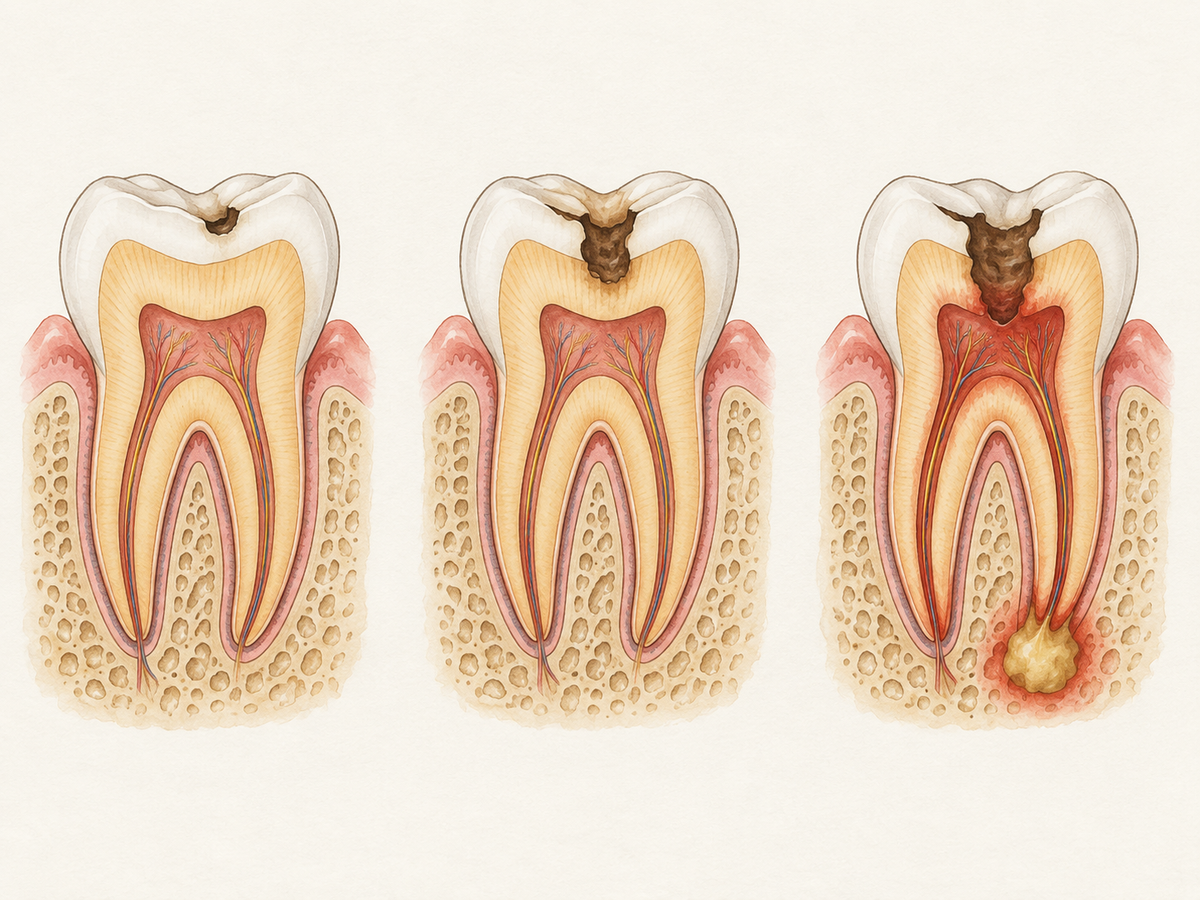
- Oral health: Are your teeth and gums healthy? Cavities, gum disease, or broken teeth should be treated before whitening.
Choose strips if your teeth are generally healthy, your stains are mostly on the surface, and you want a convenient, lower-cost option.
See a dentist instead if you have deep stains, medication-related discoloration, visible fillings or crowns, gum disease, or sensitivity that persists. A dentist can identify the stain type and suggest the safest plan.
The practical next step is simple: look at the kind of stain you have and whether any dental work is visible. From there, the choice between strips, professional whitening, or a restoration becomes much clearer.
This article has been reviewed by an oral health professional for accuracy. It is intended to provide general educational information and should not be used as a substitute for personalized medical advice, diagnosis, or treatment. If you have questions or concerns about your oral health, please consult a dentist, physician, or other qualified healthcare provider.