














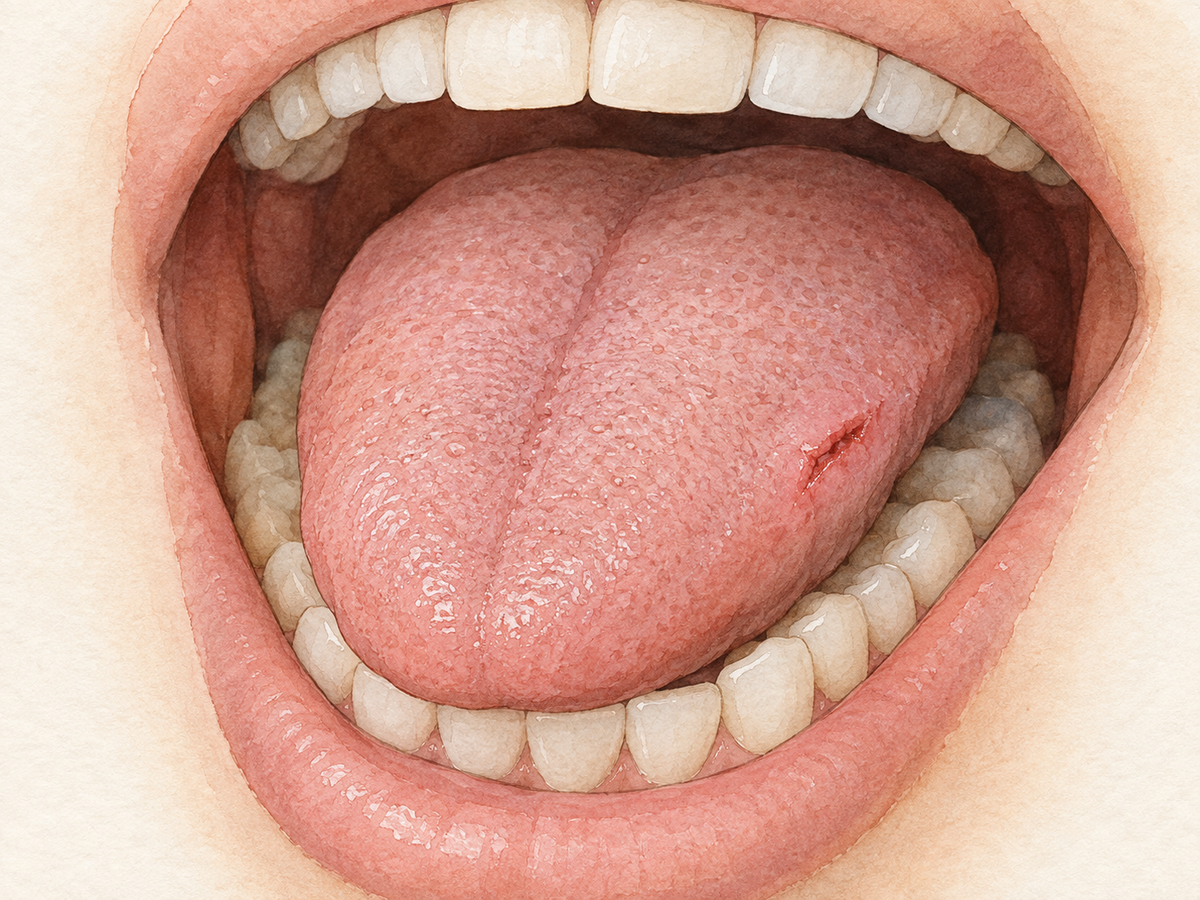
Most tongue bites are minor and heal well on their own. For a typical small bite, press a clean gauze pad or clean cloth on the cut until bleeding stops, rinse gently with cool water, and use a cold pack to limit swelling. If bleeding lasts longer than 10–15 minutes with steady pressure, the cut is deep or gaping, or you have trouble breathing or swallowing, get professional care.
Check Severity First
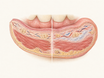
A tongue bite can be a shallow scrape or a deeper cut, sometimes called a laceration. Most tongue cuts heal well, but the first step is to separate a minor injury from one that may need a professional look.
Look in a mirror in good light. A small bite may look like a short scrape or a shallow nick. A deeper injury may be longer, open up at rest, or bleed heavily.
Signs that you should not manage the injury only at home include:
- Bleeding that keeps going after 10–15 minutes of steady pressure
- A deep, open cut that gapes at rest
- Swelling that makes speaking or swallowing harder
- New numbness in the tongue or nearby area
- Trouble breathing or swallowing
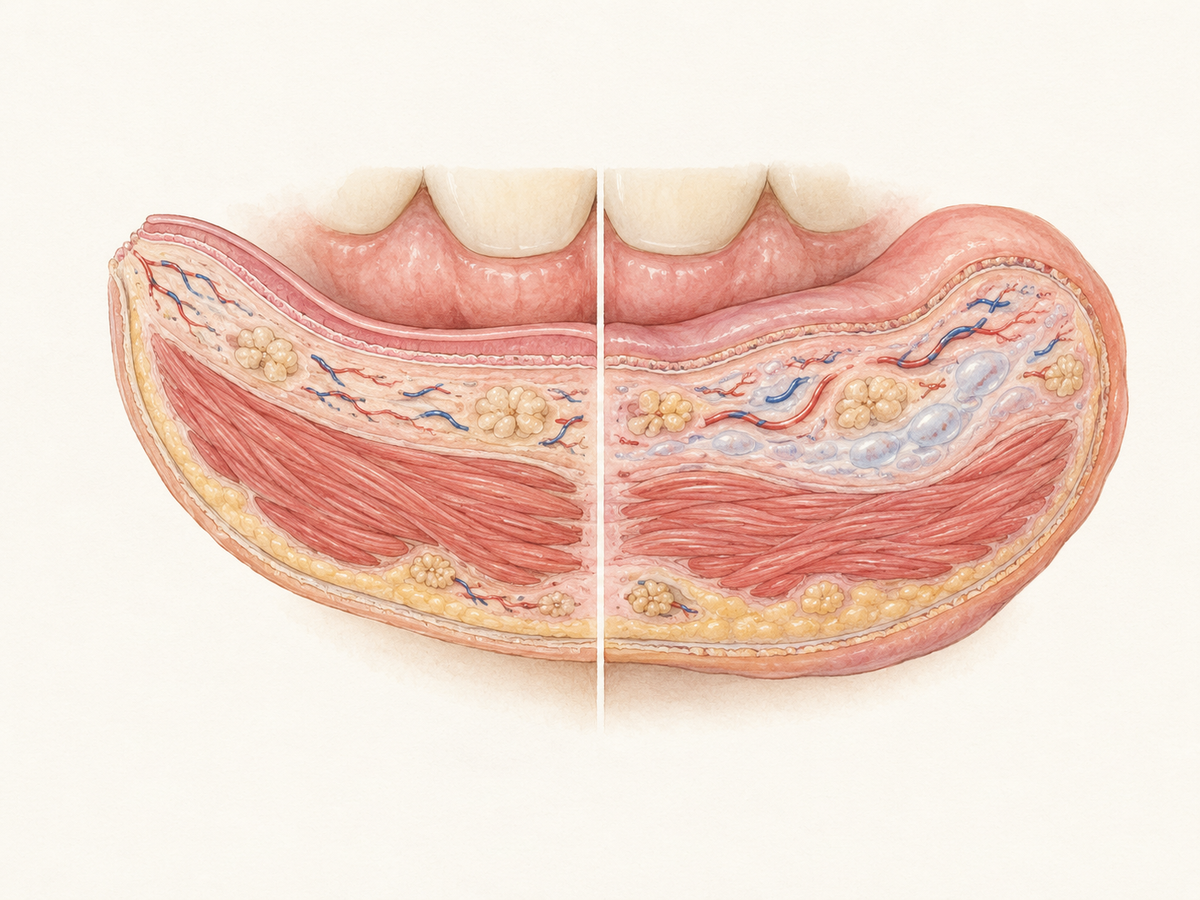
The tongue has a rich blood supply, so even a small cut can look dramatic at first. That does not automatically mean it is an emergency. But deep wounds, uncontrolled bleeding, or difficulty breathing or swallowing need prompt evaluation by a dentist, urgent care, or emergency department.
If none of those serious signs are present, home care is usually enough.
Home Care That Helps
For a minor tongue bite, the goal is to stop bleeding, reduce pain and swelling, and avoid irritating the wound.
Here are the basic steps:
- Rinse gently with cool water or a mild saline rinse. Do not scrub or swish hard.
- Press clean gauze or a clean cloth on the bleeding area for 5–10 minutes. If the gauze soaks through, add another layer on top instead of lifting the first one.
- Use a cold pack or ice wrapped in a cloth on the outside of the mouth, cheek, or chin for 10–15 minutes at a time.
- Avoid hot, spicy, sour, salty, or rough foods for the first day or so.
- After the first day, you can switch to a warm salt-water rinse after meals if it feels soothing.
Pressure, cold, and resting the tongue can help bleeding settle, according to clinical guidance on tongue lacerations. Gentle saline rinses are considered harmless and can help keep the mouth clean and comfortable, according to oral care guidance.
Do not poke the wound with your finger or a cotton swab, and avoid alcohol-based mouthwashes, which can sting.
Pain Relief and Eating Hacks
Even a small tongue bite can make talking, chewing, and brushing painful. The first day or two are usually the worst.
To keep things more comfortable:
- Over-the-counter pain medicine such as acetaminophen or ibuprofen may help. Follow the package directions. If you take other medications or have liver, kidney, or stomach problems, ask a pharmacist or clinician first.
- Ice chips or small sips of cold water can soothe the area and provide some numbing.
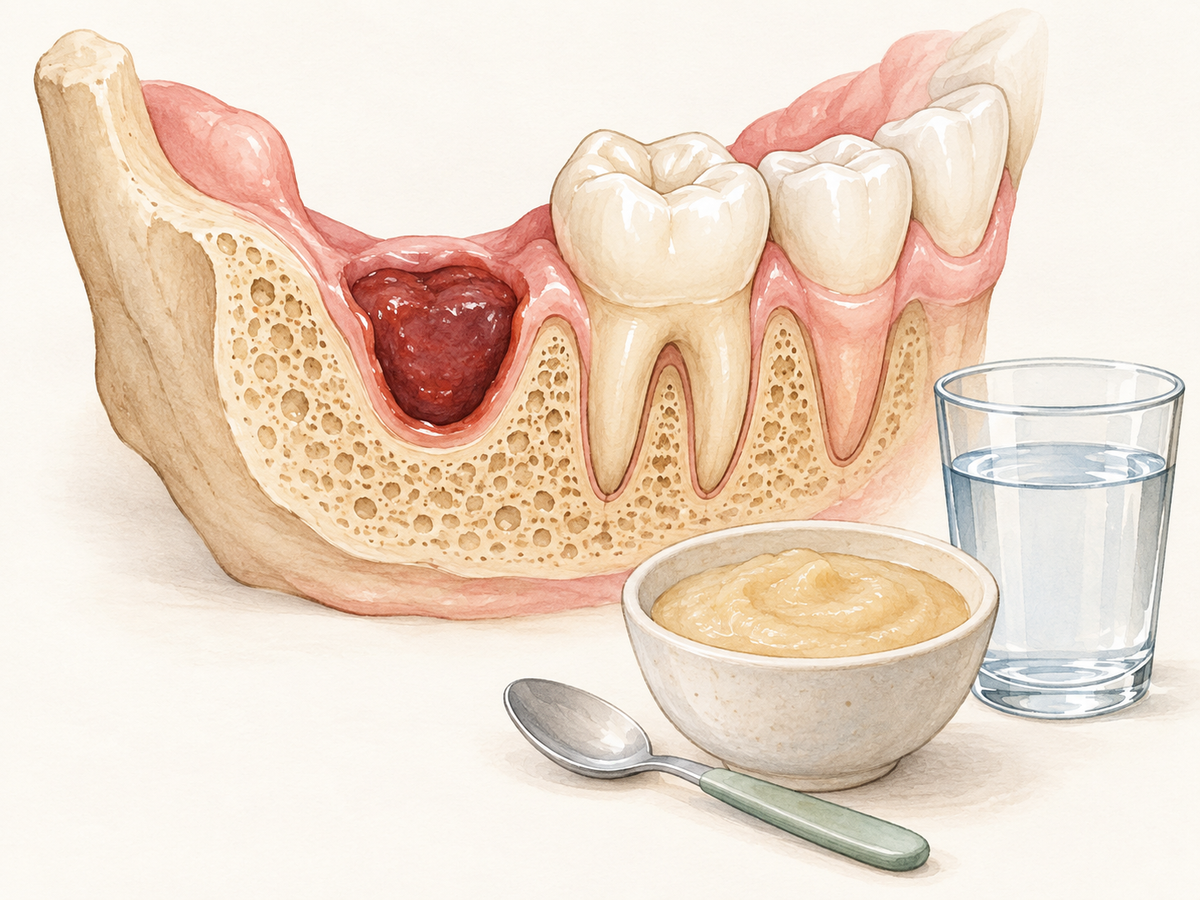
- Soft, cool foods are easier to eat. Try yogurt, applesauce, smoothies, cottage cheese, scrambled eggs, or mashed potatoes.
- Gentle oral hygiene matters. Use a soft toothbrush and brush carefully around the sore area. Rinse after eating to keep food out of the wound.
Do not hold ice directly against the tongue for a long time. Let ice chips melt slowly in the mouth, or use a cold pack on the outside of the face.
Healing Timeline
Most people notice that soreness improves within a few days. The tongue is good at repairing itself, and many tongue cuts close within about 1 to 2 weeks.
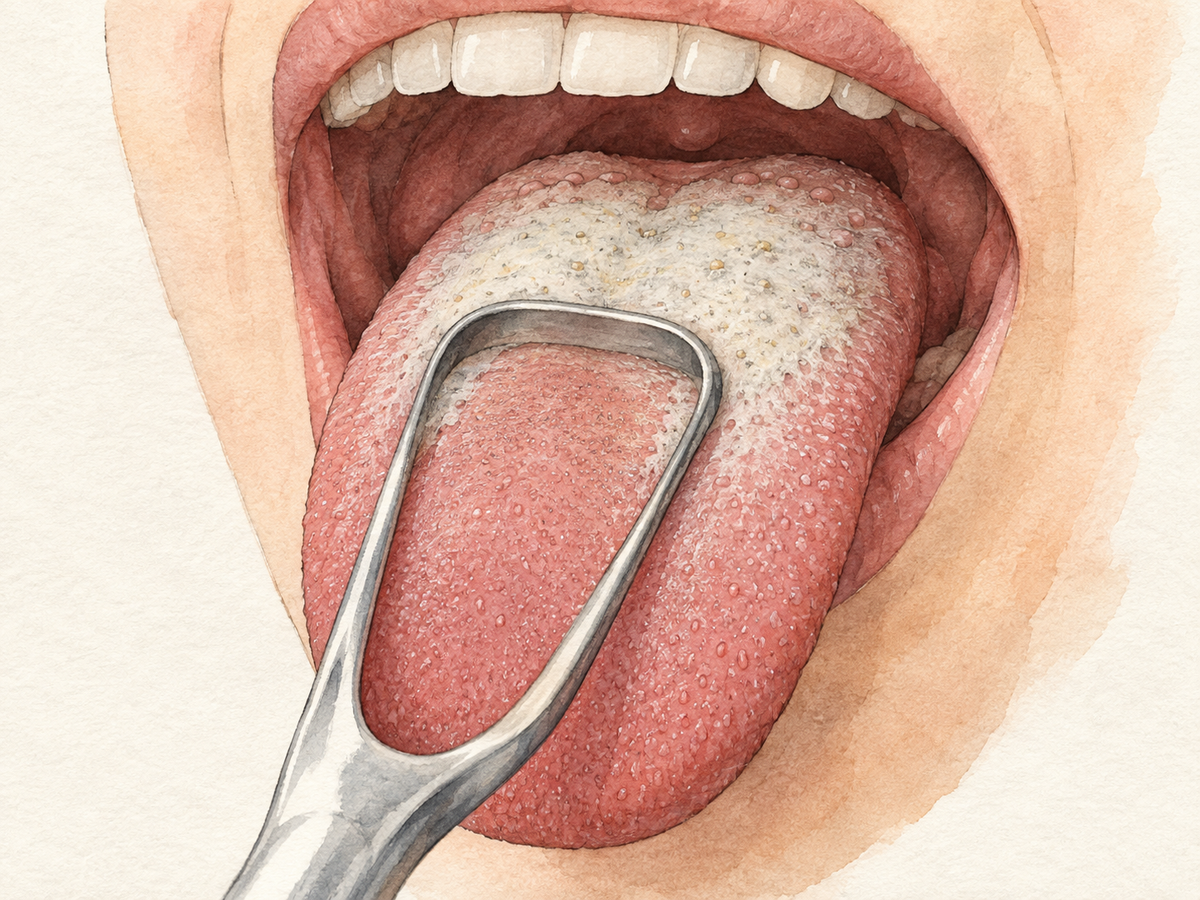
A white or yellow layer over the sore is often normal healing tissue, not pus. It is not automatically a sign of infection unless it is spreading, the pain is getting much worse, or you also have a fever.
Some things can slow healing. Smoking, diabetes, poor oral hygiene, and certain medications can affect how quickly oral tissue repairs itself. A review of oral wound healing notes that smoking and conditions such as diabetes can compromise tissue repair.
If the sore is still very painful after a week, is enlarging, or is not healing within about two weeks, have it checked rather than waiting longer.
When to Get Help
Get a professional evaluation if you notice any of these red flags:
- Bleeding that continues after 10–15 minutes of steady pressure
- A deep, gaping cut, especially on the tip or side of the tongue
- Fever or chills
- Swelling that worsens after the first day
- Pus, worsening pain, or a foul taste
- Sudden numbness after the injury
- Difficulty breathing, swallowing, or opening your mouth
Depending on the situation, you may contact:
- A dentist or dental emergency clinic for most tongue wounds
- Urgent care if you cannot reach a dentist and the wound is concerning
- An emergency department for heavy uncontrolled bleeding, severe swelling, or breathing trouble
Many tongue cuts heal without stitches. One clinical summary suggests that gaping wounds on the tongue tip or top of the tongue longer than about 2 cm are more likely to need repair, along with wounds that are actively bleeding or split the tongue deeply, according to emergency guidance on pediatric oral injuries.
The risk of infection in an otherwise healthy person with a tongue cut is low, according to a systematic review of tongue laceration management. Routine antibiotics are usually not needed for a simple clean bite inside the mouth. A clinician may consider them for contaminated wounds, signs of infection, or people at higher risk. Guidance on oral infection management supports careful observation for clean wounds rather than automatic antibiotic use.
Why It Keeps Happening
Occasional tongue biting is common. Repeated bites are worth paying attention to.
Common triggers include:
- Eating too fast or while distracted
- Talking while chewing
- Misaligned teeth or a rough filling that catches the tongue
- Loose or poorly fitting dentures
- Nighttime clenching or grinding, sometimes called bruxism
- Being stressed, overtired, or rushed during meals
Less often, repeated tongue biting can be linked to a seizure or another neurological condition, especially if it happens during sleep or with loss of consciousness, jerking, or confusion. A rare sleep-related movement disorder can also cause nighttime tongue biting without epilepsy, according to a case series on sleep-related facial mandibular myoclonus. If you mostly bite your tongue during sleep or have other unusual episodes, mention it to a healthcare professional.
Prevent the Next Bite
Many tongue bites can be avoided with a few simple changes:
- Slow down and take smaller bites.
- Chew evenly on both sides instead of one side.
- Avoid talking with a mouthful of food.
- Have a dentist check sharp teeth, rough fillings, or dental work that repeatedly catches your tongue.
- Ask about a night guard if you clench or grind at night.
- Manage stress and avoid rushing through meals when you are tired.
- If tongue bites happen often, schedule a dental check rather than just toughing it out.
A one-time tongue bite is usually a short-term nuisance. If it is deep, keeps bleeding, or happens over and over, a professional look can help you avoid a more serious problem.
This article has been reviewed by an oral health professional for accuracy. It is intended to provide general educational information and should not be used as a substitute for personalized medical advice, diagnosis, or treatment. If you have questions or concerns about your oral health, please consult a dentist, physician, or other qualified healthcare provider.