















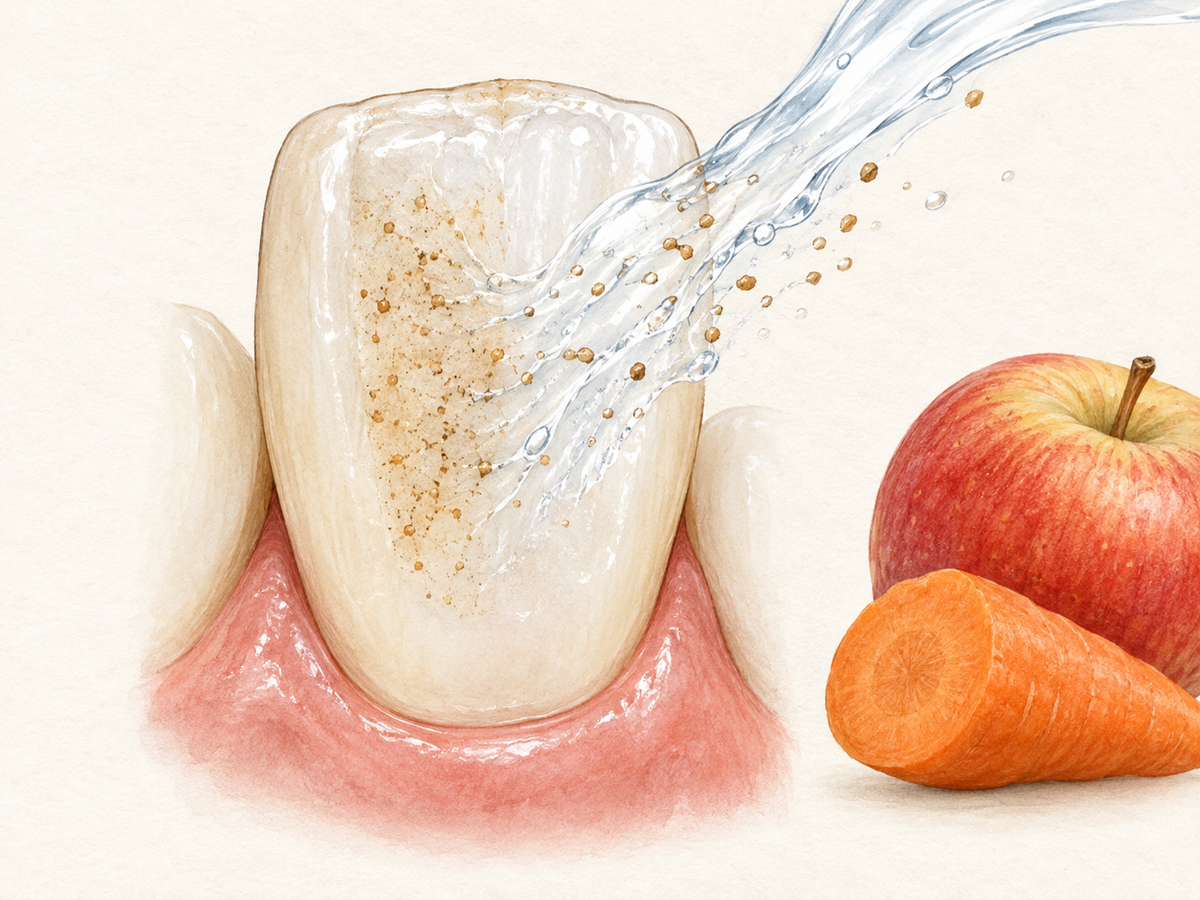
Food will not bleach your teeth the way a whitening treatment can. But the right foods can help prevent new surface stains, support the outer tooth surface, and clear stain-causing colors before they settle. The realistic goal is stain control and a cleaner-looking smile, not dramatic whitening from diet alone.
Whitening-friendly foods are daily stain control. If you want a visible shade change, ask a dentist about professional whitening.
Why Food Can Affect Tooth Color
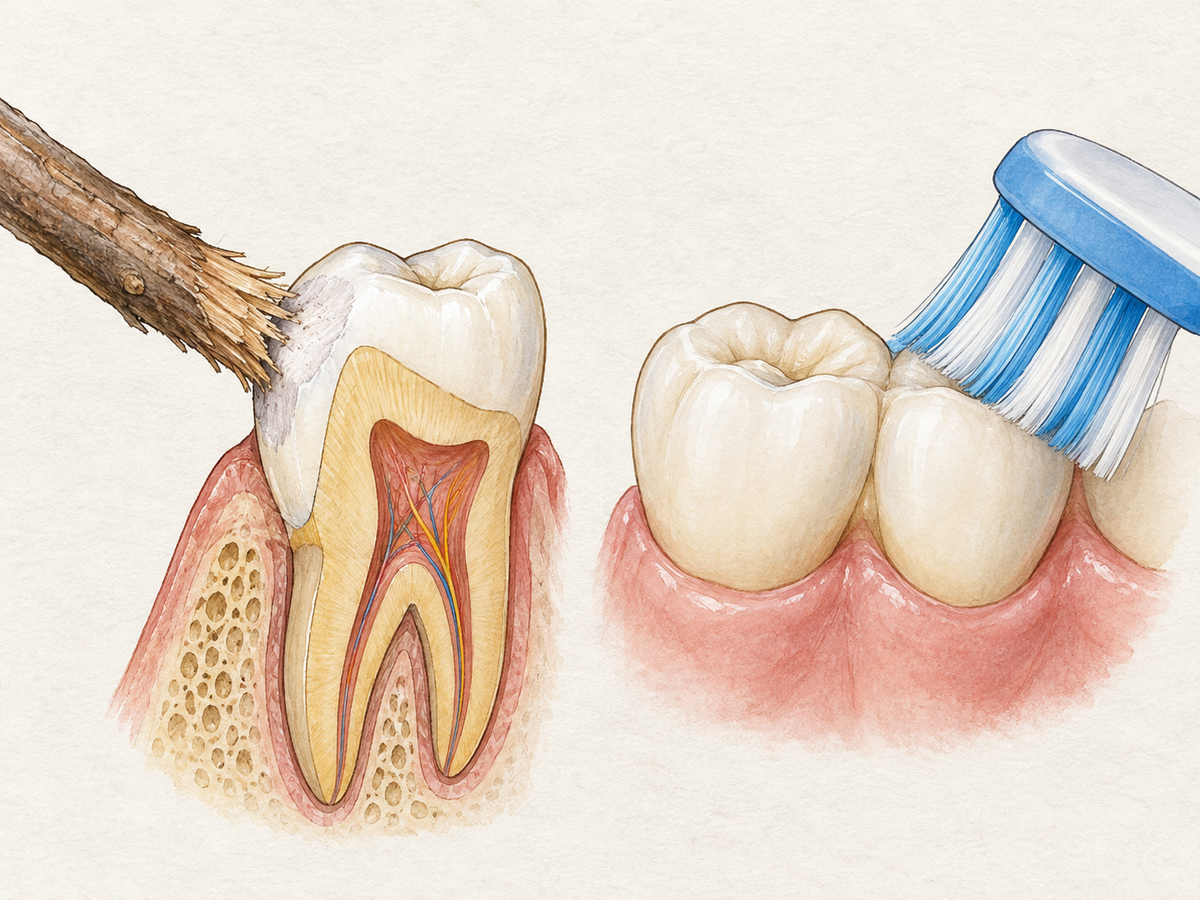
Your teeth are covered by enamel, the hard outer tooth surface. During the day, a thin coating, also called a pellicle, forms on that surface. Stain-causing food colors can collect in this coating and make teeth look dull or yellow.
Food does not bleach enamel. But some foods change the conditions in your mouth. Saliva, your natural mouth fluid, helps wash away food particles and stain-causing colors. Crunchy foods can boost saliva flow. Some foods also supply tooth-supporting minerals. On the other hand, acid in foods and drinks can soften enamel over time, which may make staining easier.
That is why food is best seen as maintenance. It supports a cleaner surface, but it is not the same as professional or product-based whitening.
Best Whitening-Friendly Foods
These foods are helpful because they support saliva, supply minerals, or gently polish the tooth surface. They are stain-prevention choices, not bleaching tools.
| Food group | Examples | How it may help |
|---|---|---|
| Crisp fruits and vegetables | Apples, carrots, celery | Chewing boosts saliva and may gently wipe surface film |
| Dairy | Cheese, plain yogurt, milk | Supplies calcium; milk may reduce tea staining |
| Nuts and seeds | Almonds, sunflower seeds | Mildly abrasive texture may help polish surface film |
| Green tea | Unsweetened green tea | May support plaque control; not a bleach |
In a lab study, adding milk to tea significantly reduced tea’s ability to stain teeth. The protein casein appeared to be responsible (study on tea staining). Calcium also appears to help reduce enamel loss when added to acidic drinks (calcium review).
Unsweetened green tea may help with plaque control and reduce erosion, but that is not the same as whitening (green tea review).
Smart Eating and Pairing Habits
Timing and pairing matter more than any single “magic” food.
Stain-heavy foods and drinks are less of a problem when they are finished in a reasonable time, rather than sipped or snacked on for hours. The longer teeth sit in contact with pigments or acids, the more opportunity there is for staining or enamel softening.
Try these habits:
- Pair berries, tomato sauce, or dark sauces with crunchy produce like celery or carrots.
- Rinse your mouth with water after a staining meal.
- Use a straw for deeply colored drinks, and position it toward the back of the mouth.
- Do not swish staining or acidic drinks around your teeth.
Drinking habits matter. Clinical guidance notes that swallowing an acidic drink in bigger gulps over a shorter time is less hazardous than sipping it over an extended period (erosive tooth wear guidance). Frequent acid intake between meals and holding drinks in the mouth can also increase risk (diet and tooth wear review).
Drinks That Help and Hurt
Some drinks are gentler on teeth, while others combine staining pigments with acid or sugar.
| Drink type | Examples | Main concern |
|---|---|---|
| Helpful | Water | Rinses pigments and keeps the mouth moist |
| Helpful | Milk | Not a dark stain source; may reduce tea staining |
| Helpful | Unsweetened green tea | May support oral health without added sugar |
| Risky | Coffee, black tea, red wine | Can leave surface stains |
| Risky | Cola, sports drinks, citrus water | Acid and sometimes sugar risks |
Sipping frequency matters. A review of adolescent dental erosion identified carbonated drinks, fruit juice, sports and energy drinks, and tea among reported risk factors. Swishing or holding drinks in the mouth was also linked to erosion (dietary acids review).
Citrus water is a hidden acid source because lemon or lime added to water can soften enamel over time (diet and tooth wear review). If you drink something acidic, rinse with water afterward and wait about an hour before brushing (preventive advice).
Biggest Food and Drink Stain Traps
Some foods and drinks are more likely to leave color behind.
Common culprits include:
- Coffee, black tea, red wine, and dark soda
- Berries, curry, tomato sauce, and soy sauce
A laboratory study found that black tea and red wine produced the most staining. Coffee and coffee with milk also caused measurable staining compared with water (beverage staining study). Another study found that drinking cola or orange juice before coffee made coffee-related staining worse (coffee stain study).
Acid and sugar add another layer. Acid can soften enamel, while sugar feeds bacteria in the mouth. You do not need to avoid every dark food or drink. The easiest changes are to reduce slow sipping, pair dark foods with crunchy produce, and rinse with water afterward.
Natural Methods That Can Backfire
“Natural” does not always mean safe. Some DIY whitening ideas can wear away enamel and make teeth look more yellow over time.
Avoid or be cautious with:
- Lemon juice and apple cider vinegar: They are acidic. Lab studies link lemon juice to surface roughness and enamel loss. The temporary “whiter” look may come from etching the enamel, not true whitening (natural vs professional whitening study, acid erosion study).
- Charcoal: There is not enough evidence to support many charcoal whitening claims (charcoal dentifrices review).
- Excessive baking soda or harsh scrubbing: Aggressive cleaning can wear the tooth surface over time (tooth whitening review).
Stop a DIY method if you notice increased sensitivity, dullness, or edges that look more transparent. For visible results, dentist-approved whitening is the safer route.
A Simple Daily Food Routine
Consistency matters more than intensity. A few repeatable habits are enough:
- Drink or rinse with water when you wake up and after meals.
- Choose stain-prevention snacks like apples, carrots, cheese, plain yogurt, or nuts.
- Eat stain-heavy foods earlier in the day rather than right before bed.
- Rinse with water after coffee, tea, red wine, or dark sauces.
- After acidic drinks, wait about an hour before brushing.
When Food Isn’t Enough
Food helps mainly with surface stains. Intrinsic stains are color changes inside the tooth, and they usually sit beyond the reach of everyday foods and whitening toothpastes (tooth whitening review).
Food alone may also be limited when you have:
- Older fillings that have changed color
- Thinning enamel
- Deep discoloration
- Tooth sensitivity
See a dentist if you have sensitivity, signs of enamel damage, or expectations that food cannot meet. A dental evaluation can identify the cause of discoloration. Professional whitening may be a better next step when you want a visible shade change.
 Best Overall
 Best Value
 Best for Sensitive Teeth
This article has been reviewed by an oral health professional for accuracy. It is intended to provide general educational information and should not be used as a substitute for personalized medical advice, diagnosis, or treatment. If you have questions or concerns about your oral health, please consult a dentist, physician, or other qualified healthcare provider.