











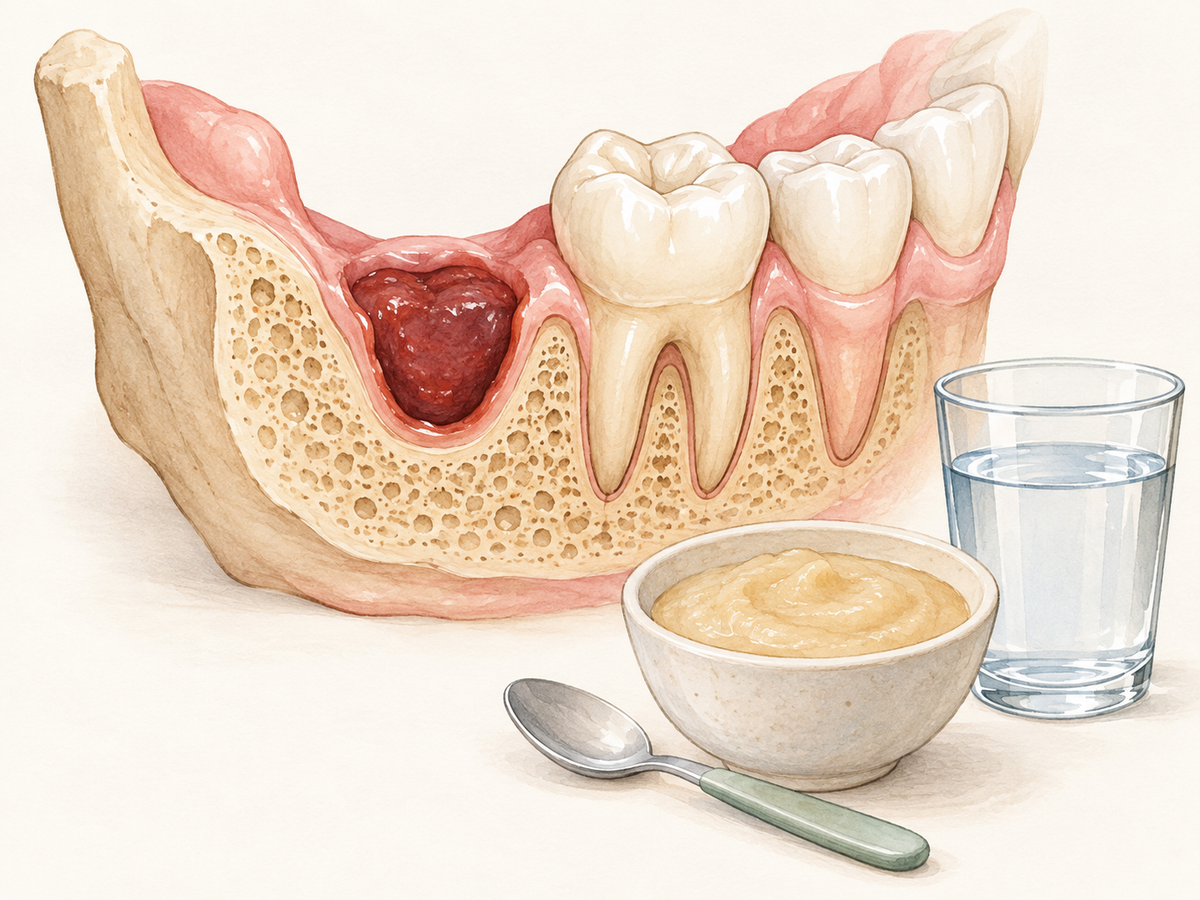
After wisdom teeth removal, stick with cool or lukewarm, smooth, soft foods for the first 24 to 48 hours. As jaw soreness and swelling improve, slowly add soft foods that need only gentle chewing. Avoid hot, crunchy, spicy, sticky, or seeded foods, and skip straws, to protect the blood clot that forms in the healing socket.
Remember: the blood clot in the tooth socket is your healing foundation. If a food is hot, hard, sticky, or requires suction, skip it until your dentist says the site is ready.
Healing Timeline and Food Stages
When the tooth comes out, the empty space is called the extraction socket. It fills with blood, and that blood forms a protective clot, much like a scab inside the hole. In the first week, the body begins replacing that clot with healing tissue. Read more about how extraction sockets heal.
Swelling and a sore or stiff jaw are normal in the first few days. They can make chewing feel awkward and make the area more sensitive to heat. Your food textures should follow that comfort level. You are not stuck on liquids forever.
| Stage | Timing | Suggested textures |
|---|---|---|
| First 24 hours | Day 1 | Cool or lukewarm liquids, thin smooth purees, no chewing |
| Days 2–3 | Swelling may peak | Soft foods that need little or no chewing |
| Days 4–7 | Soreness and swelling gradually ease | Soft foods plus gentle-chew options |
| Week 2+ | Healing continues underneath | Gradually firmer foods if comfortable |
Best Soft Foods for Healing
A soft diet can become boring and low in energy if you only eat ice cream or broth. Try to include protein, calories, fluids, and vitamins and minerals. Protein supports tissue repair, and some early evidence links higher protein intake with better early healing after third molar removal. Read the protein and healing study.
- Protein: Greek yogurt, scrambled eggs, soft tofu, cottage cheese, protein-enriched smoothies, well-mashed beans.
- Calories and energy: mashed avocado, creamy blended soups with olive oil, smooth nut or seed butters when your dentist says they are okay.
- Hydration: water, lukewarm broth, diluted fruit juice, cooled herbal tea.
- Vitamins and minerals: pureed cooked vegetables, smooth applesauce, mashed banana, seedless smoothies with spinach or blueberries.
Texture tweaks: thin a smoothie with milk or water if swallowing is hard. Thicken it with yogurt or avocado if you need more energy. Keep foods cool or lukewarm rather than hot. Avoid pieces, skins, and seeds.
Plain dairy is usually fine. There is an older idea that milk and dairy should be avoided after oral surgery, but current evidence does not support that advice. Greek yogurt and other dairy foods may even be comfortable and cooling. Unless your dentist gives a specific reason, you do not need to cut out dairy. Read the dairy review.
Foods and Drinks to Avoid
Some foods and drinks are more likely to irritate the healing area, disturb the clot, or cause discomfort.
- Crunchy snacks: chips, crackers, raw veggies, popcorn. They can scrape or poke the socket. Safer swap: soft bread, overcooked pasta, mashed potatoes.
- Spicy foods: hot peppers or heavily spiced dishes can sting irritated tissue. Safer swap: mild soups with gentle herbs.
- Very hot foods and drinks: heat can irritate the socket, and post-extraction guidance recommends avoiding hot items early on. Safer swap: lukewarm soup, room-temperature smoothies. Read post-extraction guidance.
- Acidic drinks: citrus juice, lemonade, and soda can sting. Safer swap: water, milk, diluted apple or pear juice.
- Sticky sweets: caramel, taffy, gummies. They can cling to teeth or the socket. Safer swap: smooth pudding, applesauce, ice cream.
- Seeds and nuts: small particles can get trapped. Safer swap: seedless smoothies, silken tofu, cottage cheese.
- Alcohol, caffeine, and fizzy drinks: alcohol can irritate the wound and may not mix well with pain medicine. Caffeine can be dehydrating. Fizzy drinks may cause discomfort or burping. Safer swap: water, lukewarm caffeine-free tea.
- Straws: many aftercare instructions say to avoid straws because the suction could disturb the clot. Some research questions whether straws are a major cause of dry socket, but skipping straws early on is an easy, low-risk precaution. Drink from a cup instead. Read the dry socket review.
How to Eat Without Dislodging the Clot
Taking a few careful habits can help keep the healing area comfortable and protected.
- Chew on the side opposite the extraction site.
- Take small bites.
- Keep food and drinks cool or lukewarm, not hot.
- Do not slurp, spit forcefully, or use a straw.
- Sip gently from a cup.
- Avoid carbonated drinks in the first few days.
Dry socket is a painful condition where the protective clot breaks down or is lost too early, leaving the bone exposed. It usually starts 2 to 4 days after extraction. The main symptom is severe pain that may spread toward the ear or temple. Careful eating habits help reduce the chance of disturbing the site, but dry socket can still occur due to factors outside your control. Read more about dry socket.
Do not rinse or spit forcefully for the first 24 hours. Standard aftercare advice is to avoid mouth rinsing during that first day. After that, your dentist may suggest gentle warm salt water rinses or a prescribed rinse. Only rinse if your dentist approves, and swish gently. Read the post-extraction care protocol.
Sample Menus for Days 1–7
These examples are a starting point. If you are more swollen or sore, stay with smoother versions. If comfortable, add a little more texture.
| Day | Breakfast | Lunch | Dinner | Snacks and hydration |
|---|---|---|---|---|
| Day 1 | Thin yogurt or smoothie | Lukewarm broth, applesauce | Creamy smooth soup | Water, ice chips, cool diluted juice |
| Day 2 | Greek yogurt or soft scrambled eggs | Blended vegetable soup | Mashed avocado, soft cottage cheese | Protein drink, thin oatmeal |
| Day 3 | Scrambled eggs, lukewarm tea | Soft macaroni and cheese | Flaked fish, mashed sweet potato | Smooth pudding, seedless smoothie |
| Day 4 | Soft oatmeal or protein smoothie | Soft pasta with mild sauce | Scrambled eggs, well-cooked soft vegetables | Applesauce, yogurt |
| Day 5 | Soft bread with mashed avocado | Rice porridge or risotto | Tender flaked fish, mashed peas | Smoothie, soft cheese |
| Day 6 | Yogurt and seedless smoothie | Tomato soup with soft bread | Soft minced chicken with gravy, mashed potatoes | Pudding, lukewarm broth |
| Day 7 | Scrambled eggs, soft bread | Pasta with flaked fish | Soft bean dip, overcooked rice | Fruit smoothie, cottage cheese |
If you dislike sweet foods, lean on savory options:
- Lukewarm broth or egg drop soup
- Scrambled eggs or soft tofu scramble
- Mashed vegetables with olive oil
- Blended bean or lentil soup
- Soft fish with gentle herbs
- Soft pasta with mild sauce
For a vegetarian and dairy-free version, replace dairy with plant-based yogurts, milk, and protein drinks. Use tofu scramble instead of eggs, blended bean or lentil soups for protein, and avocado, olive oil, or smooth nut/seed butters for calories.
When to Call Your Dentist
Most recovery is uncomfortable but manageable. Call your dentist or seek care if you have:
- Bleeding that will not stop with gentle pressure
- Pain that gets worse after day 3 instead of better
- Fever, chills, or feeling generally unwell
- Pus or bad-smelling drainage from the socket
- Trouble swallowing or breathing
- Food stuck in the socket that gentle rinsing cannot remove
Do not poke or dig at the healing site with your finger, a cotton swab, or any tool. That can damage tissue and make pain worse. Severe pain that starts a few days after surgery may signal dry socket or infection, so contact your dentist for guidance. Read dry socket warning signs.
Easing Back to Normal Foods
Return to normal foods gradually. Start with soft-chew choices like pasta, fish, soft bread, scrambled eggs, and well-cooked vegetables. If those feel okay, try slightly firmer foods. Save crunchy or hard foods until your dentist clears you.
Let comfort guide you. If a food causes pain or bleeding, stop and go back to softer options for a day or two. Full healing is a slow process, and bone healing continues for weeks after the visible hole closes. Read the healing timeline.
When in doubt, choose the gentler food. Protecting the clot now makes the next few weeks easier.
This article has been reviewed by an oral health professional for accuracy. It is intended to provide general educational information and should not be used as a substitute for personalized medical advice, diagnosis, or treatment. If you have questions or concerns about your oral health, please consult a dentist, physician, or other qualified healthcare provider.