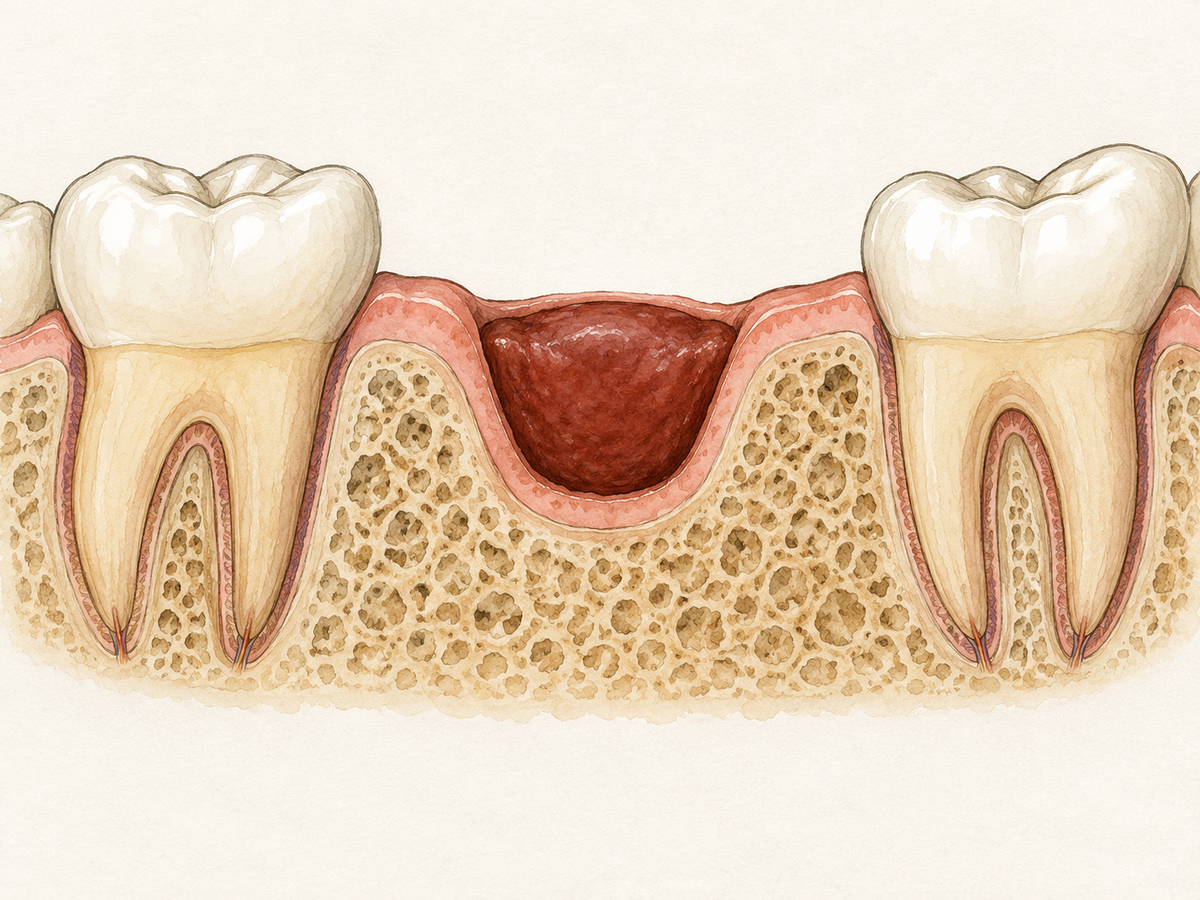















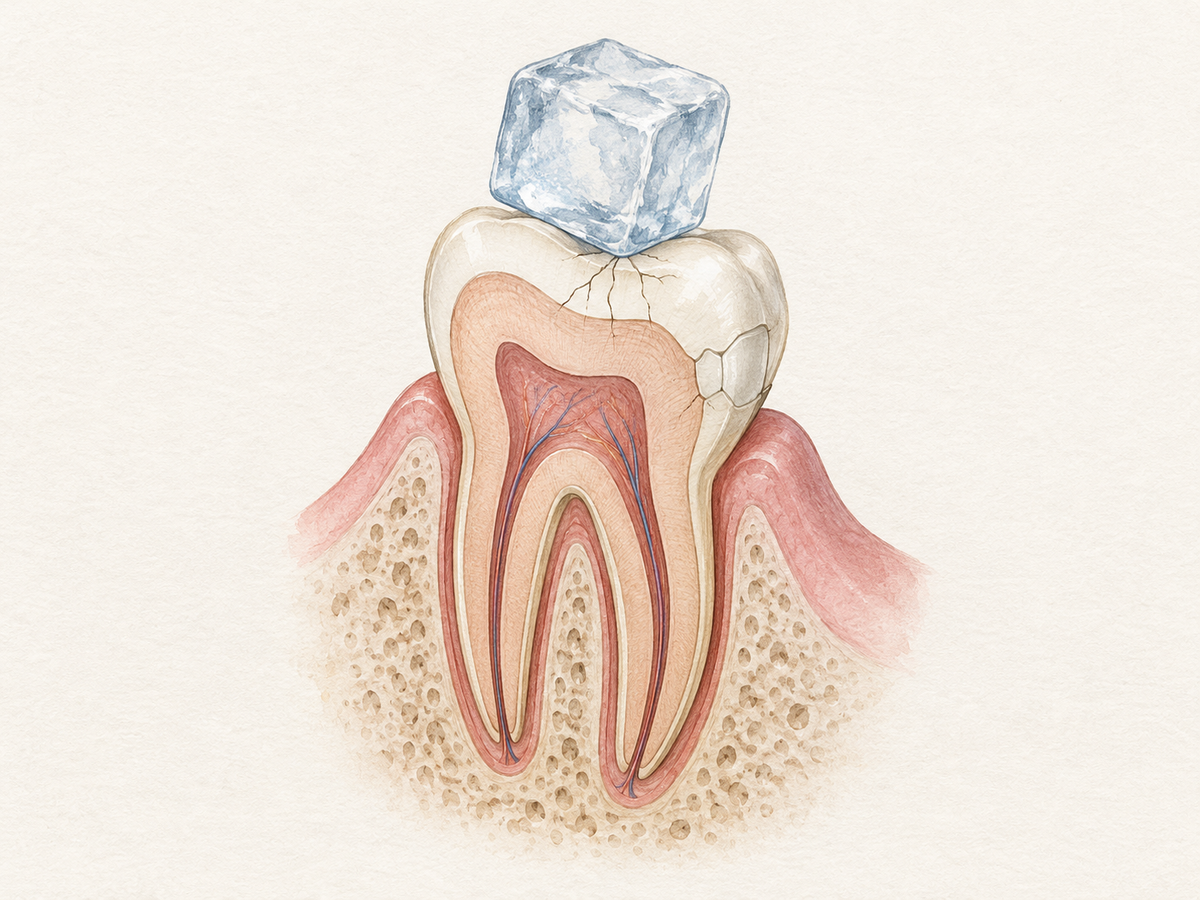
Yes. Chewing ice can crack or break teeth and damage fillings and crowns. Ice is hard and frozen, so biting it puts sharp force on the small biting points of your teeth. Even if nothing hurts right now, repeated ice chewing can weaken teeth over time.
Think of ice as a hard object, not a harmless way to stay cool. The safest time to stop is before you feel pain.
Why Ice Is Tough on Teeth
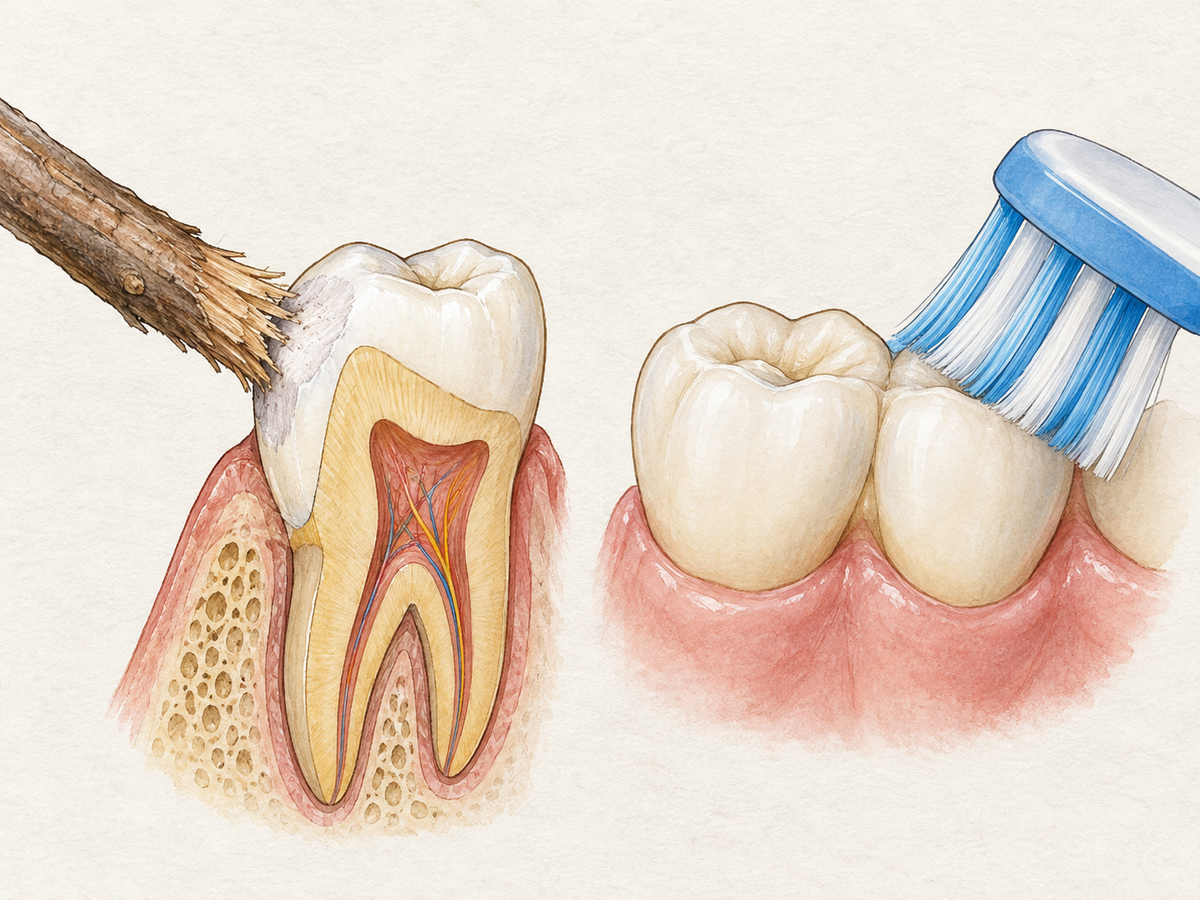
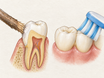
Your teeth are strong, but they are not built to crush solid ice. The outer tooth layer, called enamel, is hard but can develop tiny cracks under sharp force. The raised biting points of teeth, called cusps, take most of that load.
When you bite ice, all that force lands on a small area. Tiny cracks, sometimes called microfractures, can start in the enamel. Clinical guidance lists chewing hard foods such as ice as a habit that may cause cracks in teeth, according to dental guidance on cracked teeth.
Cold adds another problem. Ice cools the outside of the tooth quickly while the inside stays warmer. That temperature-related strain is called thermal stress. Some dental research suggests that repeated temperature swings and heavy chewing loads may contribute to crack formation, as noted in a review of cracks in teeth.
Dental restorations, such as fillings and crowns, can also be weak points. The edge where a filling or crown meets the tooth can become stressed during hard, cold chewing. Research on enamel cracks notes that restored teeth can be more vulnerable to this kind of repeated loading, according to a review of enamel crack diagnosis.
Damage That Builds Over Time
Ice damage is usually cumulative. One piece of ice may not break a tooth, but months or years of crunching can add up.
Repeated ice chewing can:
- Wear down enamel edges
- Turn small cracks into deeper ones
- Loosen fillings or crowns
- Eventually cause a tooth to break
Pain is not a reliable warning sign. Small cracks may not hurt at first. You might only notice something after a tooth breaks or a filling falls out.
Cracks can also be hard to spot, even for dentists. The full size and direction of a crack are not always visible without a close exam, according to research on cracked teeth.
Who Needs to Be Extra Careful
Some people have less room for error. You may need to be extra careful about ice if you have:
- Fillings or crowns: The seam where the restoration meets the tooth can be a weak point.
- A root canal-treated tooth: These teeth can become more brittle because they have lost some inner structure.
- Braces or aligners: Orthodontic treatment changes the way chewing force is spread across your teeth.
- Receding gums: Receding gums expose the root surface, which is not covered by enamel.
- Enamel erosion: Acid wear can thin the outer layer and reduce natural protection.
- Jaw or TMJ symptoms: Jaw soreness, clicking, or tightness can mean your jaw is already working hard.
A review of cracked teeth notes that restored and root canal-treated teeth behave differently under chewing force than natural teeth do, based on research on crack development.
When Ice Cravings Signal a Health Issue
Most ice chewing is a habit, not an illness. But if the craving feels strong or hard to control, it may be worth a medical check.
The medical term for compulsive ice chewing is pagophagia. Research links pagophagia to low iron and iron-deficiency anemia, according to a clinical review on ice cravings and iron.
Anemia means your blood does not have enough healthy red blood cells to carry oxygen well. Low iron can cause anemia. In some people, treating low iron reduces or stops the ice craving, according to a review of pica and iron deficiency and a related study on pagophagia.
Stress or an anxious oral habit can also look like a strong need to crunch something. You do not need to figure that out on your own. If the urge feels intense, ask a doctor or other healthcare professional about a checkup.
Signs You’ve Already Caused Damage
Watch for these signs after an ice-chewing habit:
- Sharp pain when you bite down
- Cold sensitivity that lingers after food or drink
- A crack or line you can see on a tooth
- A broken filling or a crown that feels loose
- Jaw soreness
- Cut or scraped gums from sharp ice edges
Some cracks are invisible to the eye or hidden under a filling. A dental exam with magnification and X-rays may be needed to find them, as noted in research on enamel crack diagnosis.
Do not assume everything is fine just because you cannot see a problem.
How to Break the Habit
Start by noticing when and why you chew ice. Common triggers include:
- Stress: You may chew ice to release tension.
- Boredom: Ice gives your mouth something to do.
- Dry mouth: Dry mouth means your mouth does not make enough saliva. Ice can feel soothing when your mouth is dry.
Then try these steps:
- Keep ice out of easy reach. Order drinks with no ice or less ice.
- Replace the behavior. Sip cold water, chew sugar-free gum, or crunch a crisp vegetable.
- Treat dry mouth if needed. Frequent small sips of water may help, and a dentist or doctor can look for causes.
- Change the routine that triggers the habit. If you chew ice in the car or at a desk, keep a safer alternative nearby.
Slip-ups happen. The goal is to make the habit harder, not to be perfect overnight.
Safer Ways to Satisfy the Crunch
| Safer choice | Why it may help |
|---|---|
| Chilled water or sugar-free gum | Satisfies the urge to chew or feel cold without hard ice |
| Crunchy vegetables like carrots or celery | Give a firm crunch that is less likely to fracture teeth |
| Chilled soft foods like cold fruit, applesauce, or yogurt | Provide a cold sensation without frozen-solid hardness |
Do not swap ice for hard candy, unpopped popcorn kernels, or chewing on pens. Those can damage teeth in similar ways. Clinical guidance for preventing cracked teeth advises avoiding hard or abrasive foods and using your teeth as tools, according to dental management tips.
When to See a Dentist
| Book a dental visit | Seek urgent care |
|---|---|
| Pain when biting or lingering temperature sensitivity | Severe pain that will not ease |
| A visible crack, broken filling, or loose crown | Swelling in the face or gums, or fever |
| Jaw soreness that does not settle | A broken tooth with exposed tissue |
| Difficulty stopping ice chewing despite repeated attempts |
A dentist can examine the tooth and may use X-rays to see cracks that are too fine to spot with the eye. If a tooth is cracked or a filling is damaged, treatment may involve a crown, an onlay, or another repair, according to clinical guidance on cracked teeth.
If you are not sure how urgent your symptoms are, call a dental office and describe what you are feeling. They can help you decide the next step.
 Best Overall
 Best Value
 Best for Sensitive Teeth
This article has been reviewed by an oral health professional for accuracy. It is intended to provide general educational information and should not be used as a substitute for personalized medical advice, diagnosis, or treatment. If you have questions or concerns about your oral health, please consult a dentist, physician, or other qualified healthcare provider.